Atlas training center opens inside a car factory campus
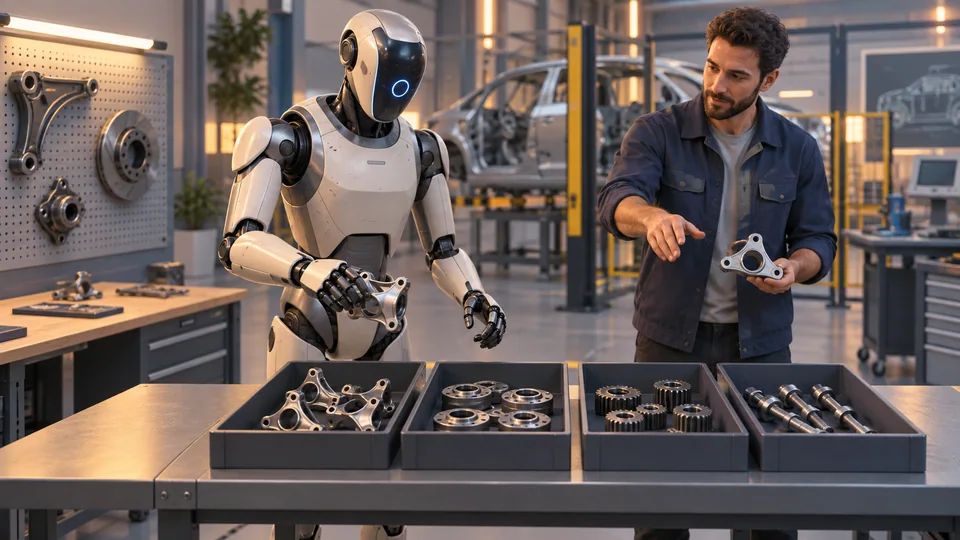
On September 21, Boston Dynamics announced an operational Atlas training center at Hyundai’s Georgia factory campus. Training includes arranging automotive parts in the order required for assembly.
Plans call for a facility roughly ten times larger in 2027 and component assembly applications by 2030. The group also plans 25,000 deployments over the coming years; this is not a claim that those robots are already working.
Our analysis
Factories could produce robot experience as well as goods
We see training environments becoming an advantage alongside robot hardware. Shifted parts, blocked paths and interruptions generate experience that polished demonstrations cannot fully provide. Firms with access to real workflows may accumulate useful training data faster.
Workers who understand production may also become robot instructors. The next question is how much experience transfers to other factories: succeeding in one setting is still different from working everywhere.
How could everyday life change?
The following is a possible future based on this news.
An expert’s methods could travel to another factory
A future expert could teach a robot how to place and check parts, then share that experience with another facility, preserving know-how in actions as well as manuals.
This is a possible outcome of training infrastructure. Repetitive heavy work could be delegated while people spend more time on new products and unusual situations.