
2027 · AI helps with everyday tasks
The world still looks much as it does today. The first changes arrive in the little tasks that fill every morning.
8 a.m. On a crowded train, you open an estimate that AI prepared overnight. At the office, you think less about making documents and more about which proposal to offer your customer.
AI drafts quotes and meeting notes
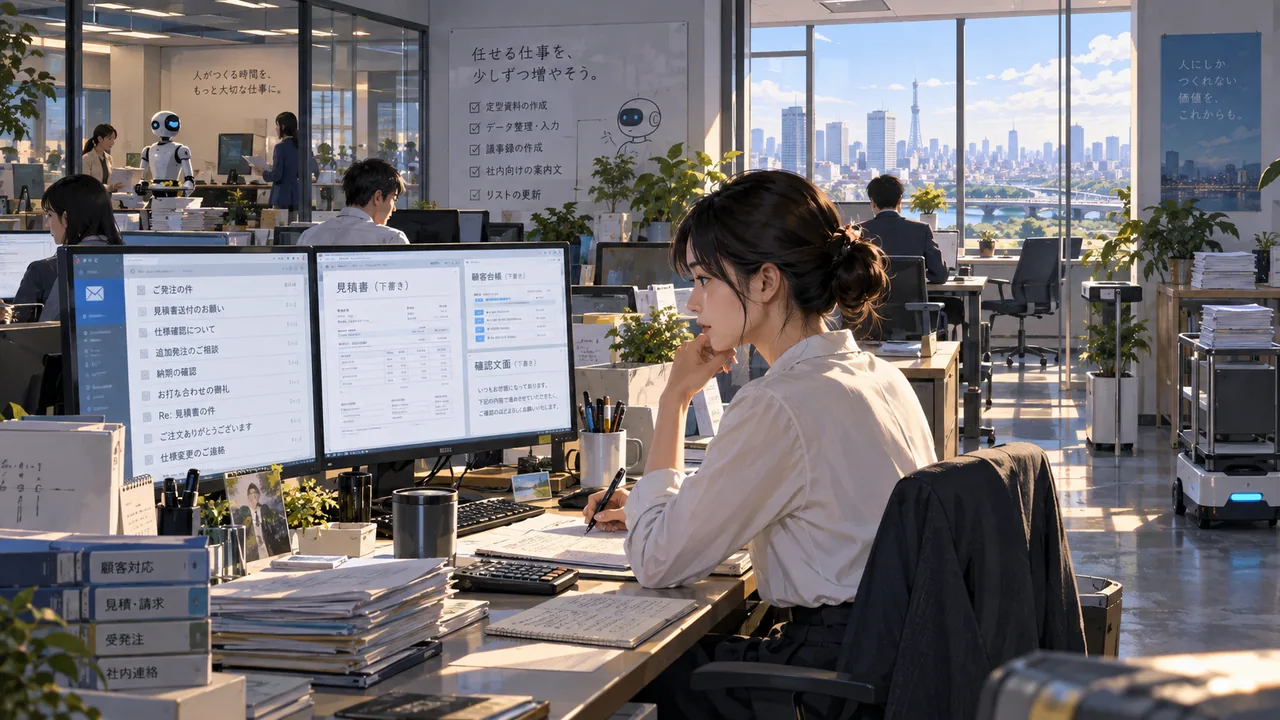
AI turns order emails into draft quotes and customer records. Staff check unusual quantities and discounts, leaving more time to talk with customers.
- What becomes less common
- Copying data/Routine translation/Polishing meeting minutes/First drafts of internal documents
- What becomes more common
- Handling exceptions/Spotting AI mistakes/Reaching agreements with customers
- How could this change happen?
- Text generation gets cheaper → AI operates internal tools → Fewer entry-level openings for routine work
Driverless shuttles serve fixed routes
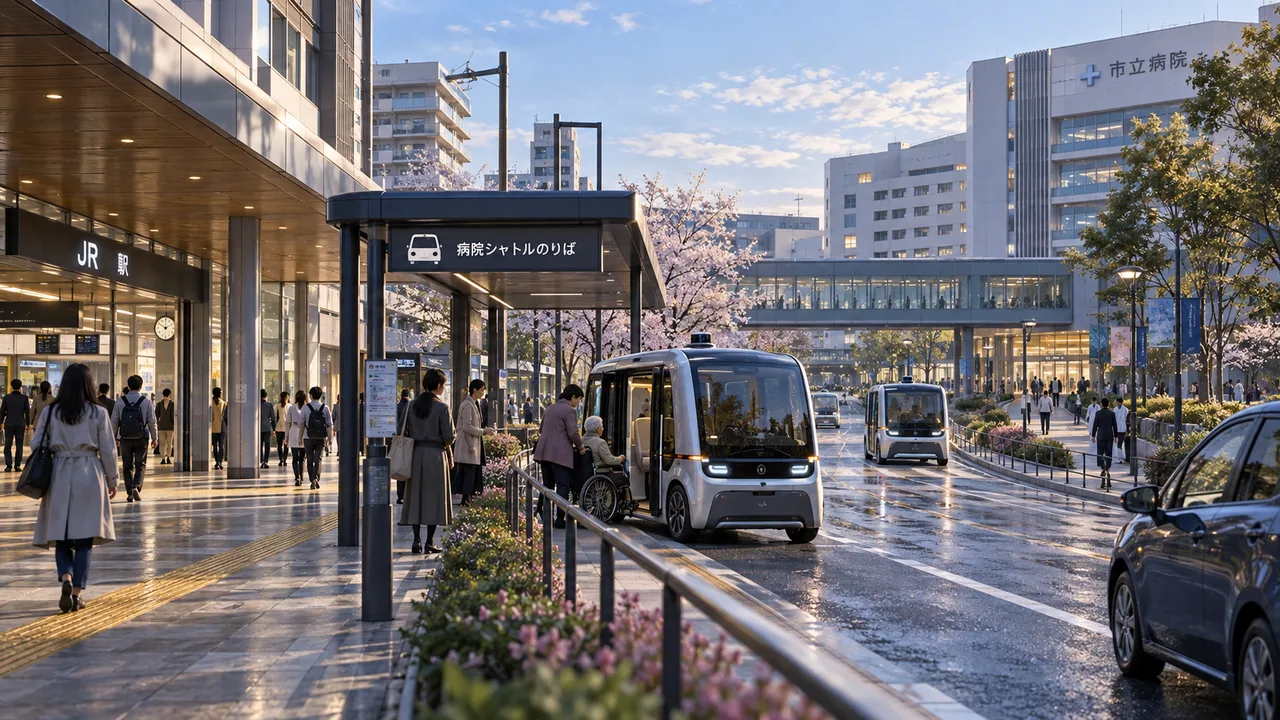
You can book a small driverless vehicle between the station and hospital. It cannot handle heavy rain or narrow lanes, but family members make fewer trips as drivers.
- What becomes less common
- Shuttling along fixed routes/Driving duties in limited areas
- What becomes more common
- Remote operations support/Cleaning vehicles/Helping passengers board
- How could this change happen?
- Build experience on easier routes → Extend driverless operating hours → Families spend less time giving lifts
AI plans meals and shopping
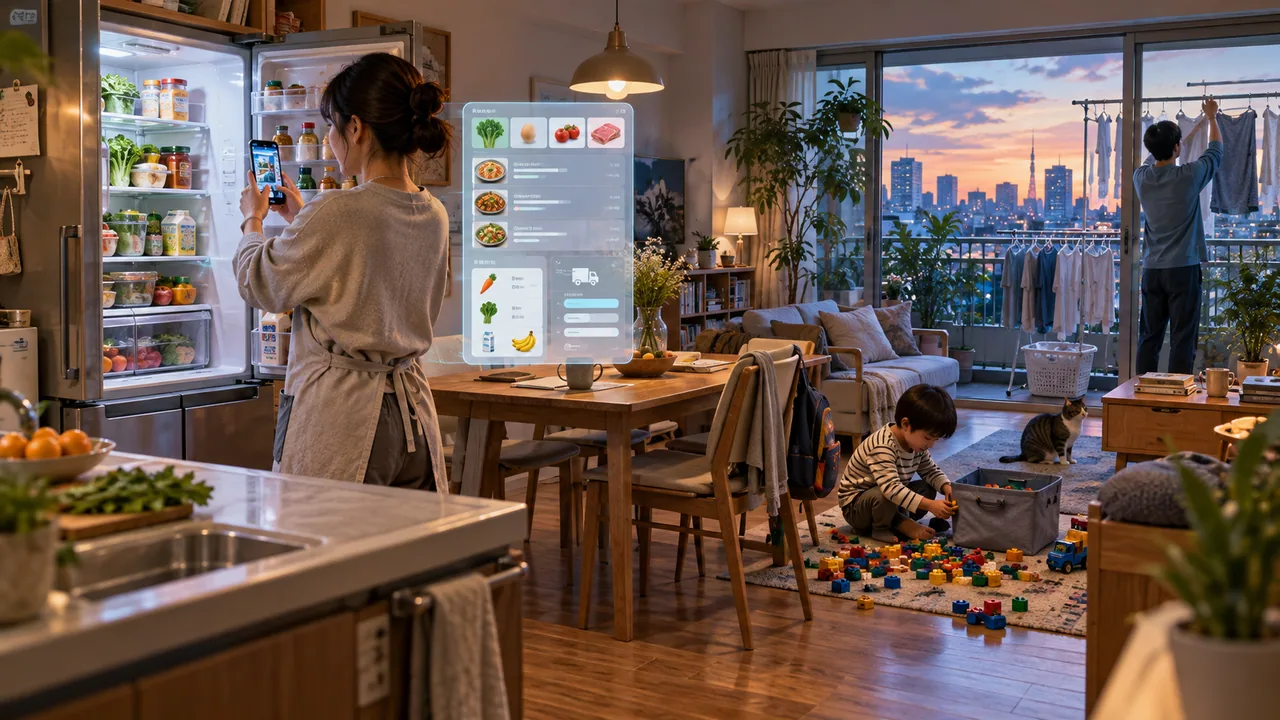
A photo of the fridge becomes a plan for using ingredients and a shopping list. You still do the laundry and tidying, but spend less time planning chores.
- What becomes less common
- Planning meals from scratch/Forgetting household supplies/Comparing booking options
- What becomes more common
- Household AI that remembers preferences/Short-term rentals of domestic robots
- How could this change happen?
- Gather household information → Coordinate chores → Physical tasks become the obvious remaining work
Organize health records before a visit
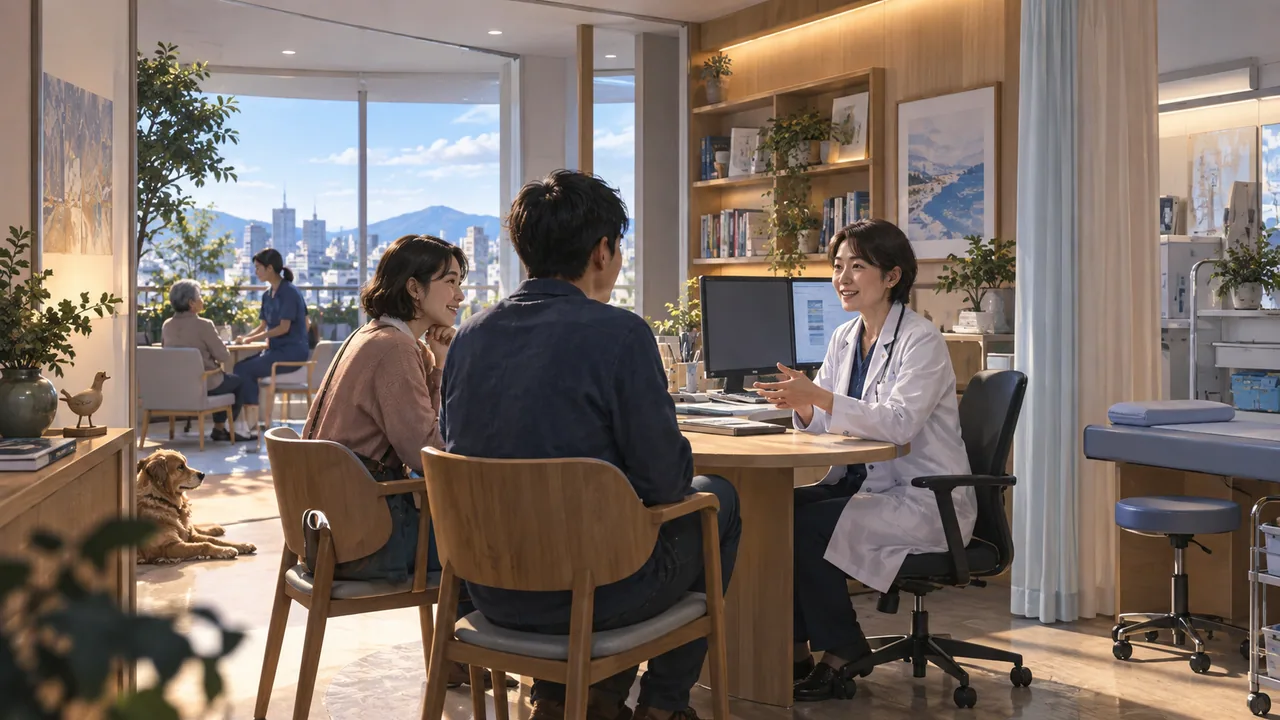
AI summarizes sleep, meals and symptoms on one page. It becomes easier to explain changes to your doctor and use the appointment for discussion.
- What becomes less common
- Forgetting to mention symptoms/Typing in health-check paperwork/Missing parts of an explanation
- What becomes more common
- Organizing information before appointments/Supporting conversations with clinicians
- How could this change happen?
- Combine everyday records → Share context before the appointment → Use scarce consultation time for decisions
Practice difficult topics with AI
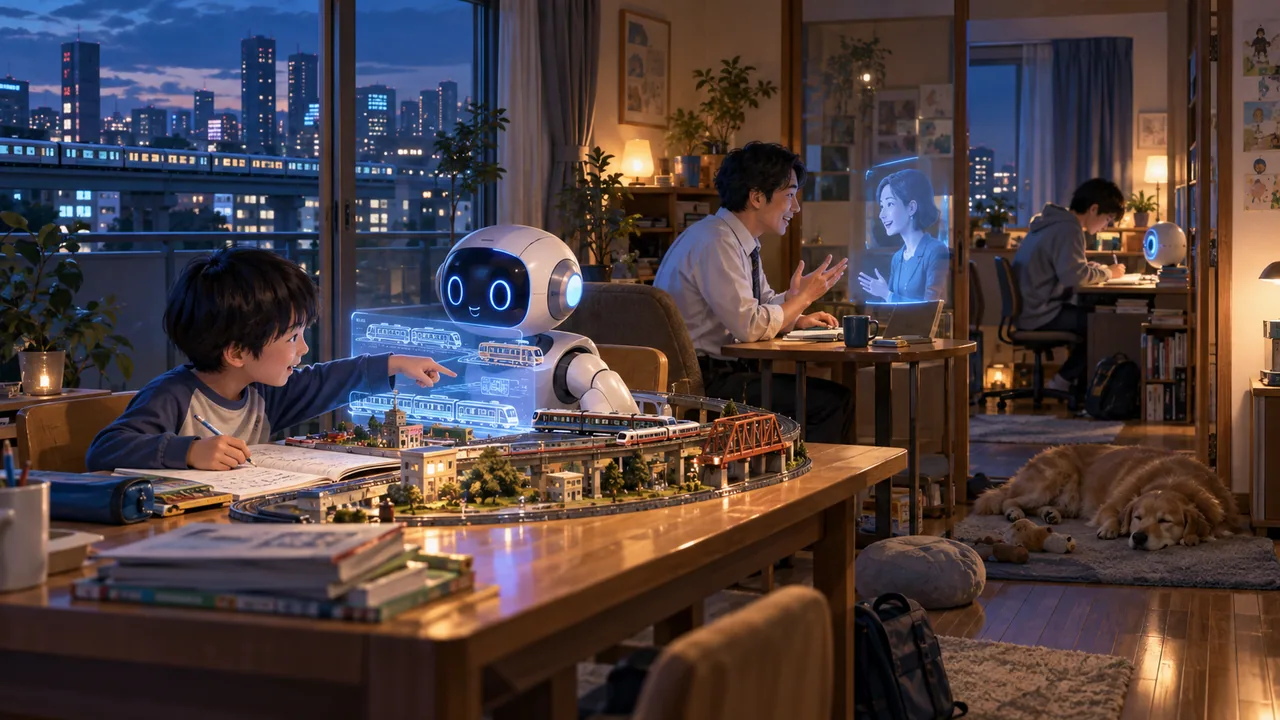
A child learns tricky maths through examples about favorite trains. An adult practices English for ten minutes after getting home.
- What becomes less common
- One-size-fits-all worksheets/Basic marking/Searching only for answers
- What becomes more common
- Lessons that check understanding through dialogue/Personalized exercises
- How could this change happen?
- Explanations become cheaper → Revisit each learner's stumbling blocks → Teachers focus on motivation and relationships
Explore public space data
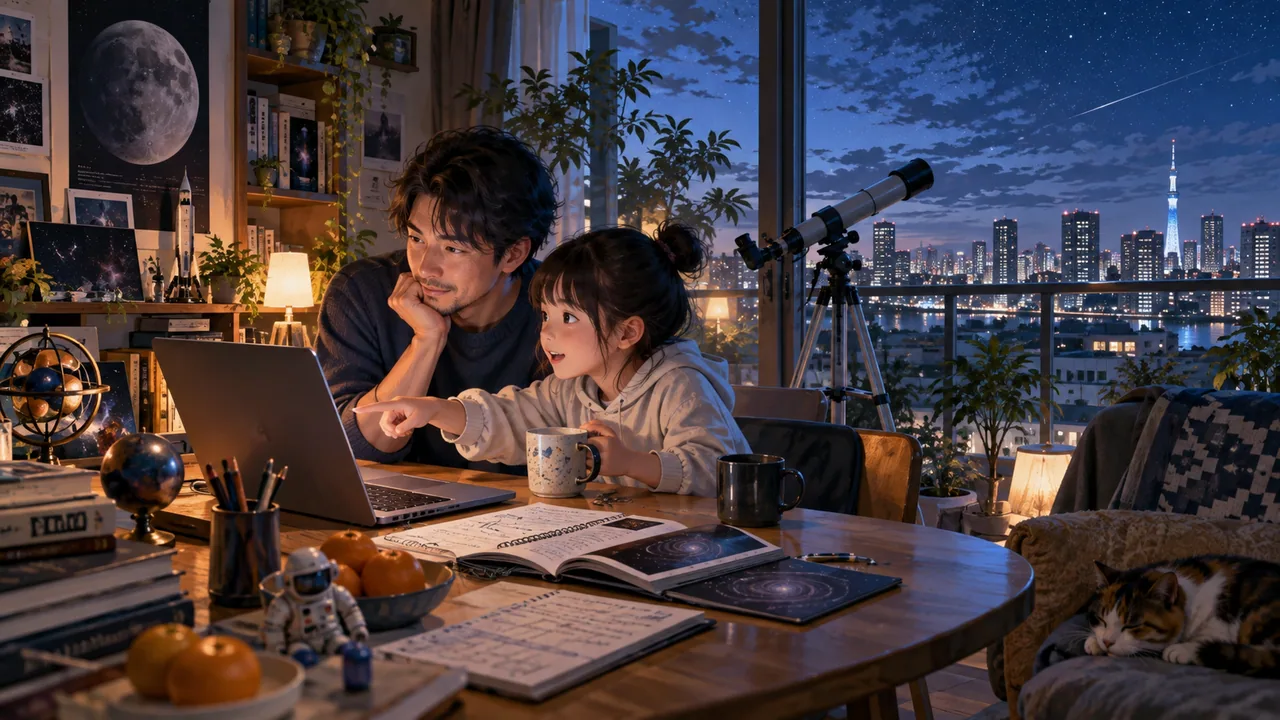
A parent and child spend the weekend examining public astronomy data with AI. When they spot an unusual light, they ask an observation group about it.
- What becomes less common
- Giving up because of unfamiliar terminology/Setting up analysis tools
- What becomes more common
- Citizen exploration of data/A continuing hobby of observation with AI
- How could this change happen?
- Analysis becomes more approachable → More people join observations → Follow space through your own questions
2028 · Smaller teams can do more
AI that feels like a dedicated team reaches small businesses and homes. New prosperity also unsettles the first steps into employment.
3 p.m. A former employee launches a product with an AI creative team. At the next table, a student searching for a job sees vacancy after vacancy asking for prior experience.
Run a shop with help from AI
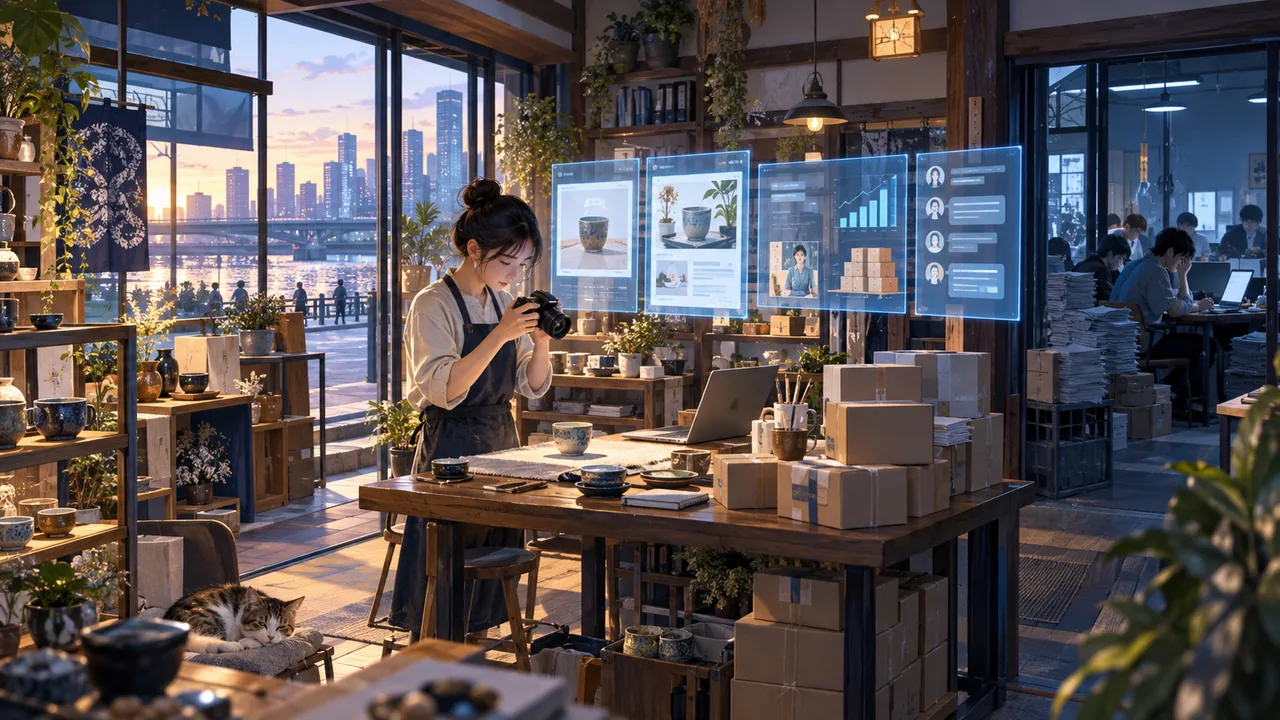
A product photo becomes a sales page and advertising drafts. AI also helps with stock and questions, allowing one person to run the shop.
- What becomes less common
- Outsourcing bulk articles/Subcontracting simple implementations/First-line customer replies
- What becomes more common
- Creators of small brands/AI operators with industry expertise
- How could this change happen?
- Multiple AIs divide the work → Small businesses lower fixed costs → Independence and subcontractor restructuring grow together
Replace a second car with driverless rides
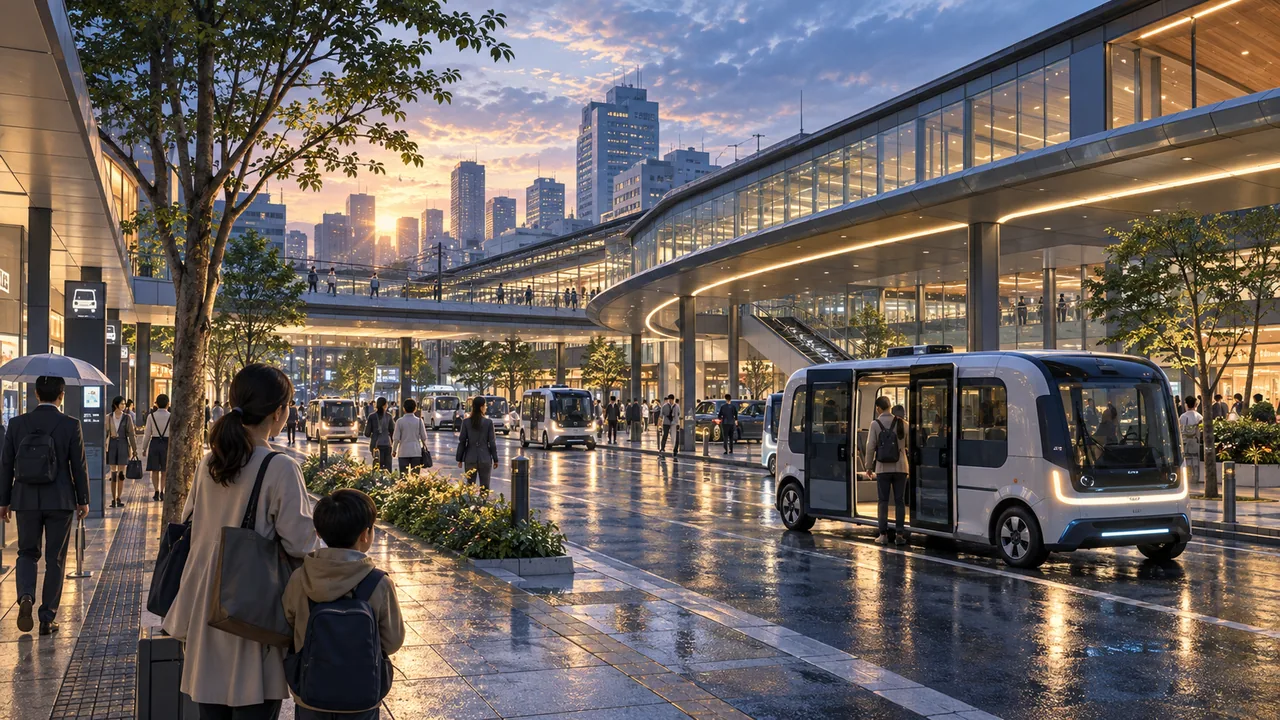
A family in a driverless service area gives up the car used for station trips. They compare waiting times at busy hours as well as monthly costs.
- What becomes less common
- Second cars for short urban trips/Short-distance services selling driving alone
- What becomes more common
- Dispatch systems that follow demand/Maintenance hubs for driverless fleets
- How could this change happen?
- Service areas connect → Everyday short trips can be delegated → Families reconsider owning a second car
Rent a household robot by the hour
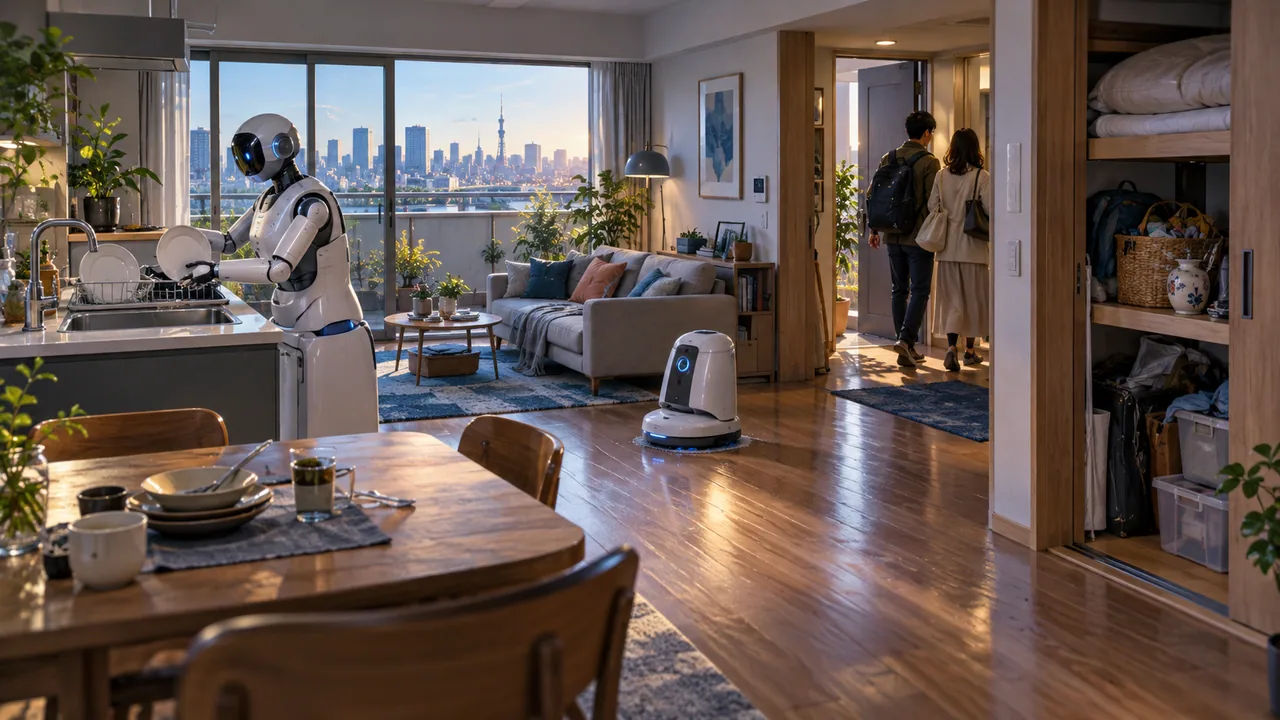
A shared-service robot visits weekly to clear dishes and clean floors. People handle difficult tasks, but spend less of the weekend cleaning.
- What becomes less common
- Routine floor cleaning/Carrying dishes/Preparing cleaning equipment
- What becomes more common
- Visiting robot services/Adapting each home's working environment
- How could this change happen?
- Focus on a narrow set of tasks → Share purchase costs across households → Household help spreads by the hour
Compare checkups with changes in daily life
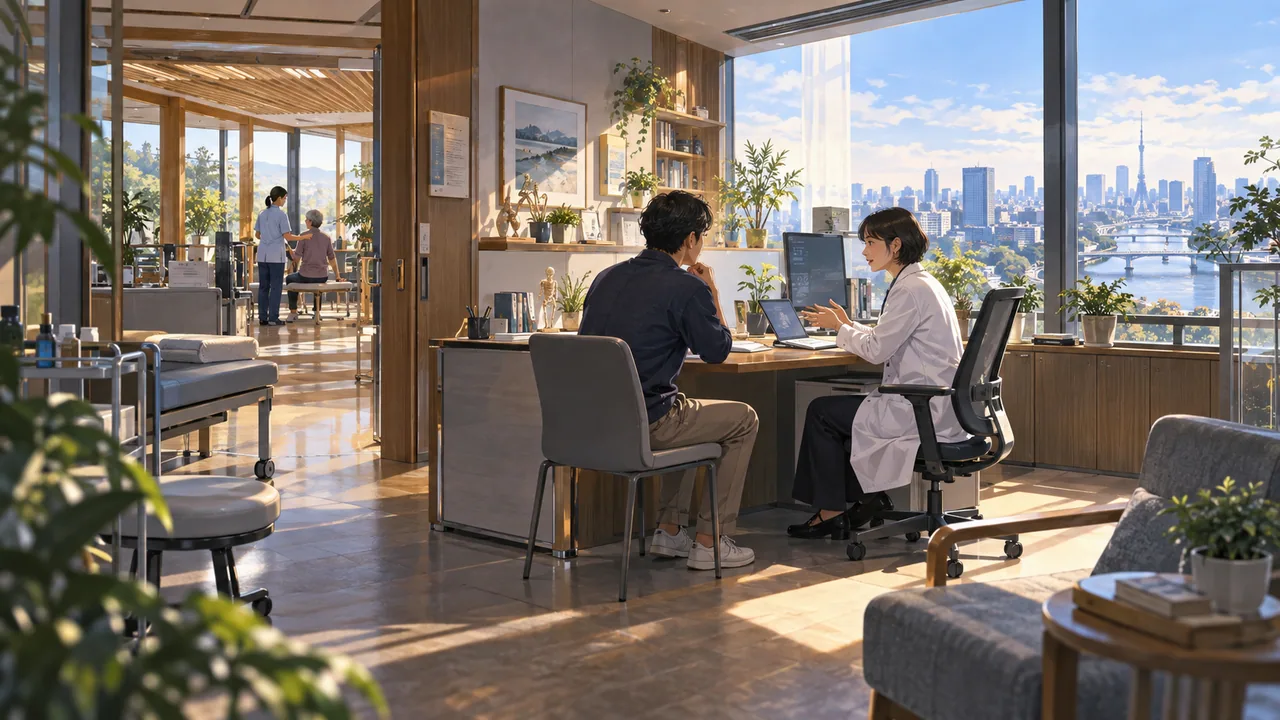
You view checkup results alongside sleep and working-hour records. You discuss changes with a clinician and keep the records for the next visit.
- What becomes less common
- Filing away paper checkup results/Completing the same history from scratch
- What becomes more common
- Care staff tracking long-term change/Connected everyday and clinical records
- How could this change happen?
- Connect isolated checkups → Notice changes earlier → Discuss which appointments to prioritize
Lessons follow each student’s understanding
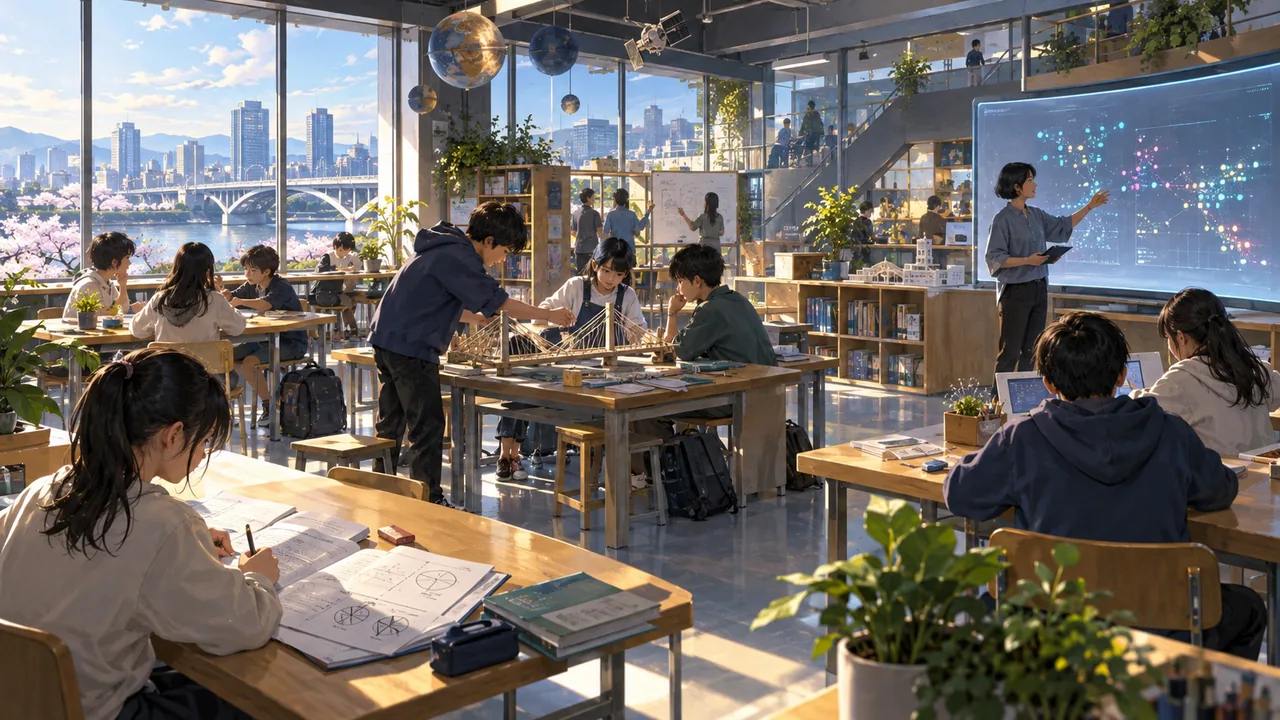
In one classroom, a student revisits fractions while another tries design work. The teacher uses AI learning records to see where help is needed.
- What becomes less common
- Exercises at one speed for everyone/Measuring effort by homework volume
- What becomes more common
- Shared making/Teachers who interpret learning histories/Short refresher courses
- How could this change happen?
- Individual explanations reach everyone → A class need not follow one pace → Time together becomes time to collaborate
Small workshops design parts for space
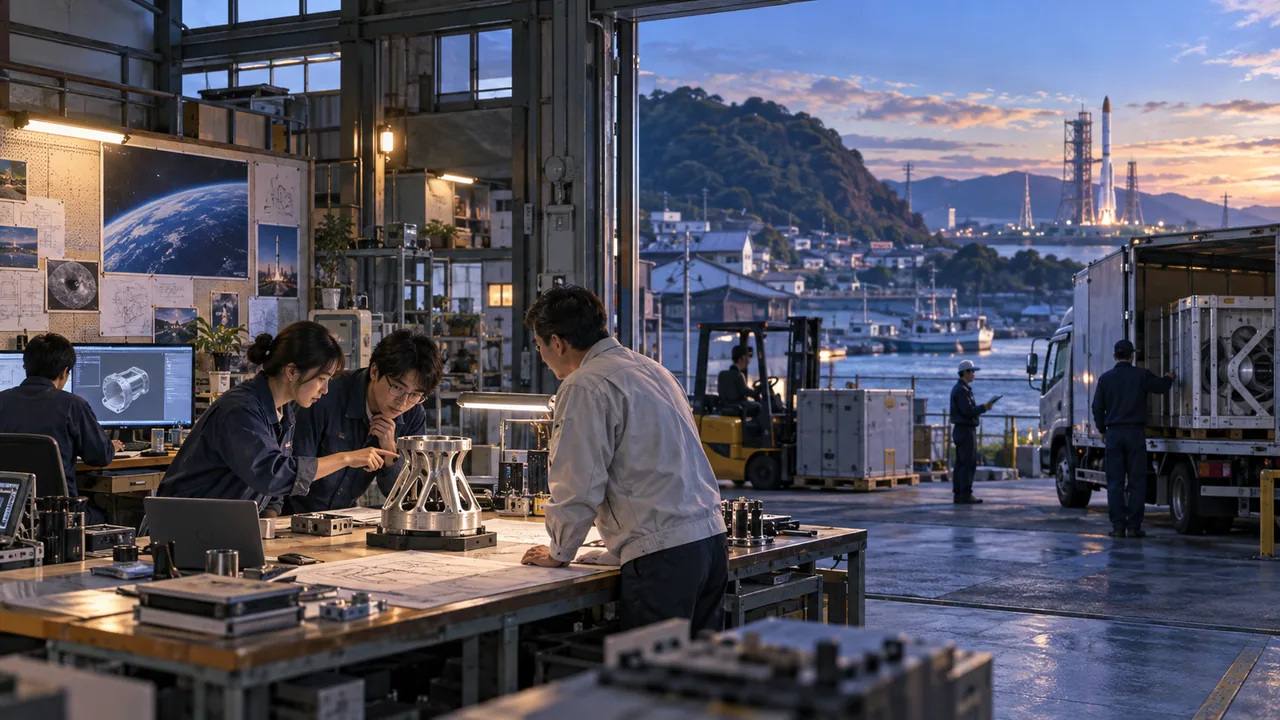
A local workshop designs a component with AI and submits it for space-use testing. Expert checks are still needed, but a small team can prepare the first design.
- What becomes less common
- Large amounts of initial drafting/Repeated background research
- What becomes more common
- Small space-hardware teams/Prototype testing facilities
- How could this change happen?
- More design attempts become possible → Smaller firms can submit ideas → The space supply chain broadens
2029 · Society decides how to use AI
Who gets access to powerful AI? The answer reaches from business competitiveness into the cost of everyday life.
Over dinner, the news is full of debates about governing AI. It sounds like distant international negotiation. Yet the family budget already shows both falling fees for work and cheaper services.
Hiring focuses on using and checking AI
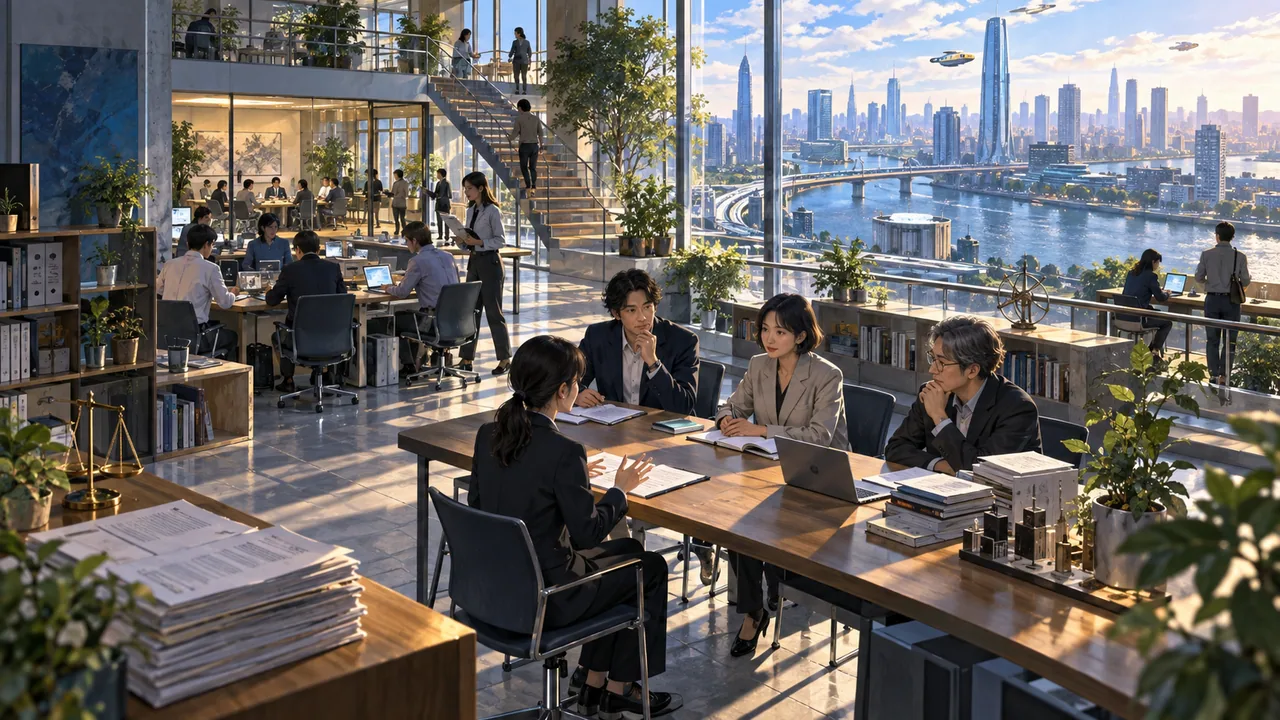
Accounting interviews focus on spotting unusual transactions rather than typing speed. Companies redesign training so new staff can still learn practical skills.
- What becomes less common
- Roles limited to reconciling forms/Manual routine testing
- What becomes more common
- Training judgment on exceptions/Designing workflows with AI/Mentors who teach in practice
- How could this change happen?
- Beginner tasks become automated → Opportunities to gain experience shrink → Training must deliberately create experience
Check driverless coverage when choosing a home
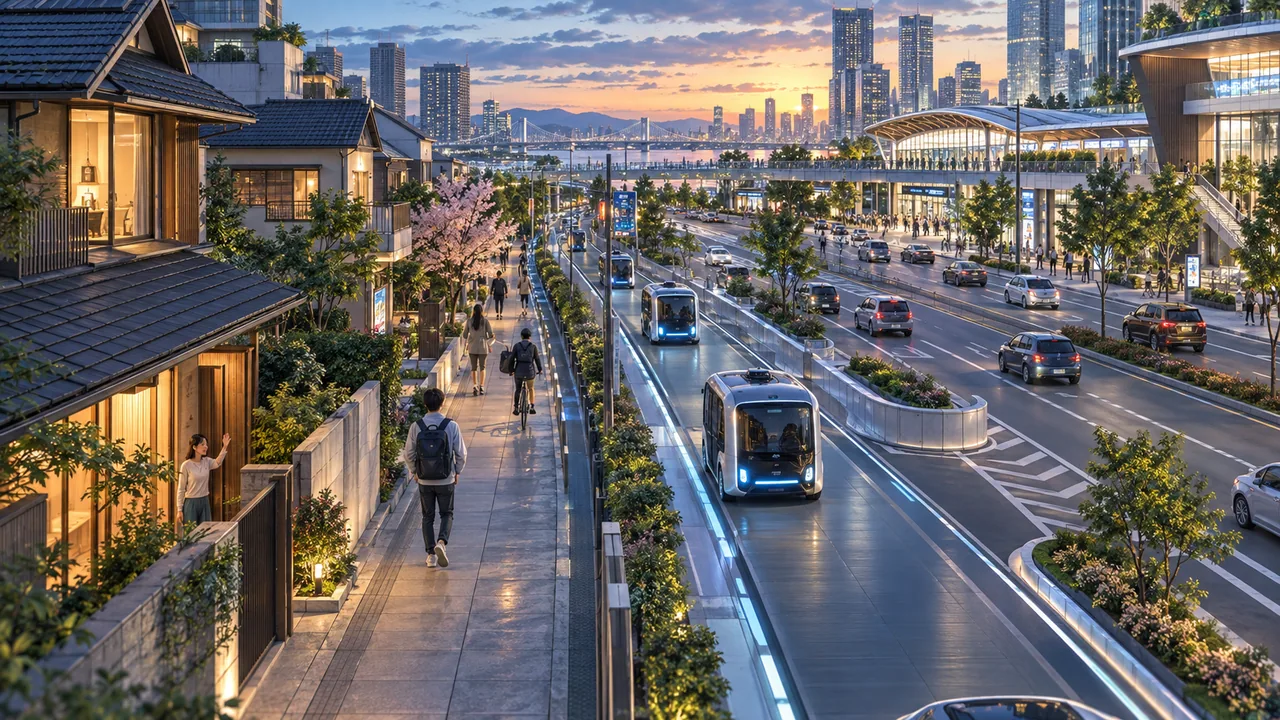
A ride app compares door-to-door fares with cheaper driverless pickups on main roads. Home hunters check service coverage as well as distance to a station.
- What becomes less common
- Assuming identical dispatch coverage everywhere/Waiting for short-stay parking
- What becomes more common
- Dedicated pickup spaces/Street design that works for pedestrians
- How could this change happen?
- Experience accumulates by area → Travel costs vary between neighborhoods → Urban design starts to anticipate driverless vehicles
Arrange rooms so robots can work
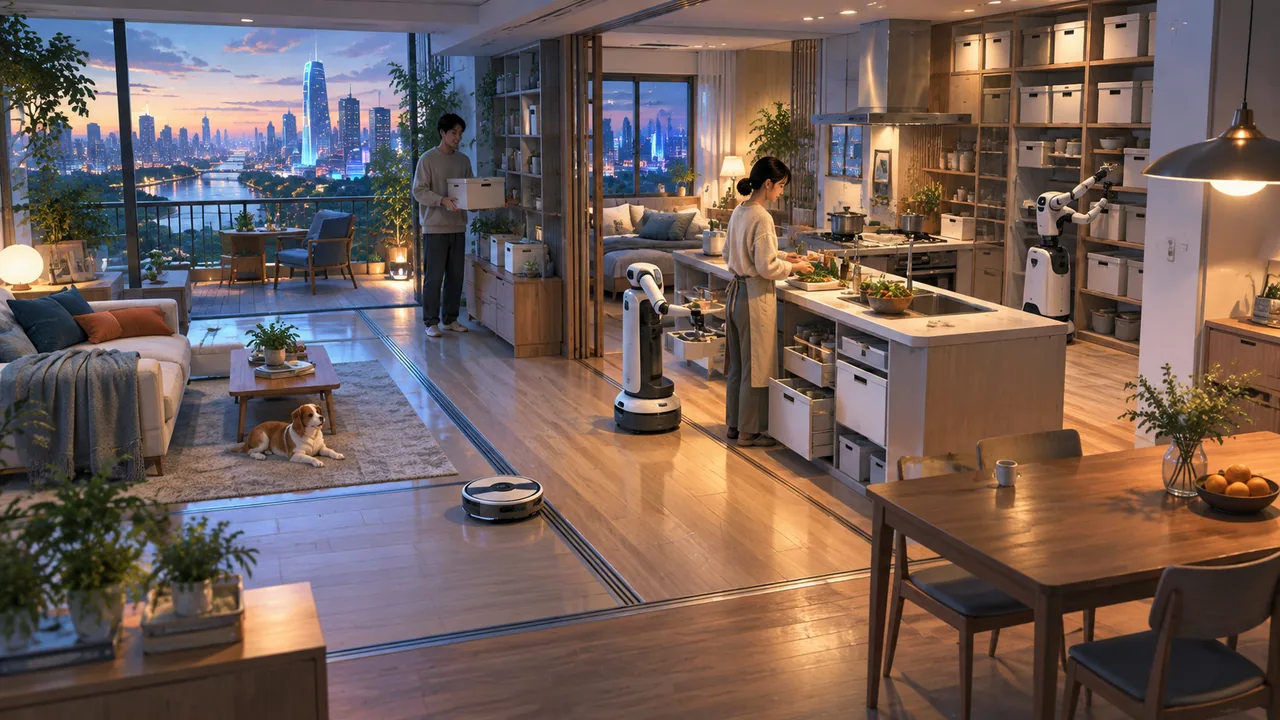
Matching storage boxes, fewer floor steps and fixed places for tools help robots work. Changing the room lets the same robot handle more chores.
- What becomes less common
- Deep gaps and complicated storage/Leaving machine-unfriendly objects on the floor
- What becomes more common
- Robot-compatible furniture/Home adaptation services
- How could this change happen?
- Understand why tasks fail → Standardize parts of the home → The same machine can do more chores
Prepare records before hospital visits
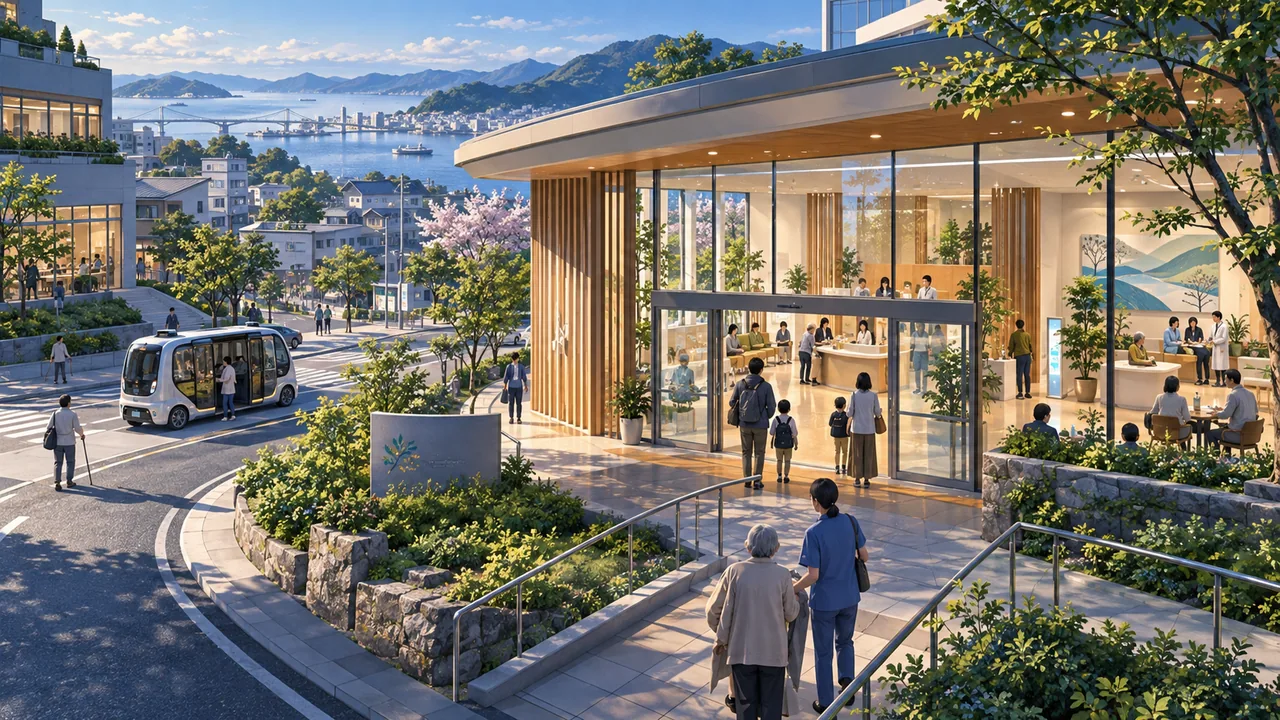
Referral letters, scan images and daily records reach a specialist together. Fewer visits are needed just for paperwork, and distant relatives can join discussions.
- What becomes less common
- Visits just to transport paperwork/Repeated data entry at different facilities
- What becomes more common
- Coordinators connecting episodes of care/Remote explanations for families
- How could this change happen?
- Information moves between services → Pre-consultation delays shrink → Clinicians have more time for treatment and discussion
Show how you made something, not just the result
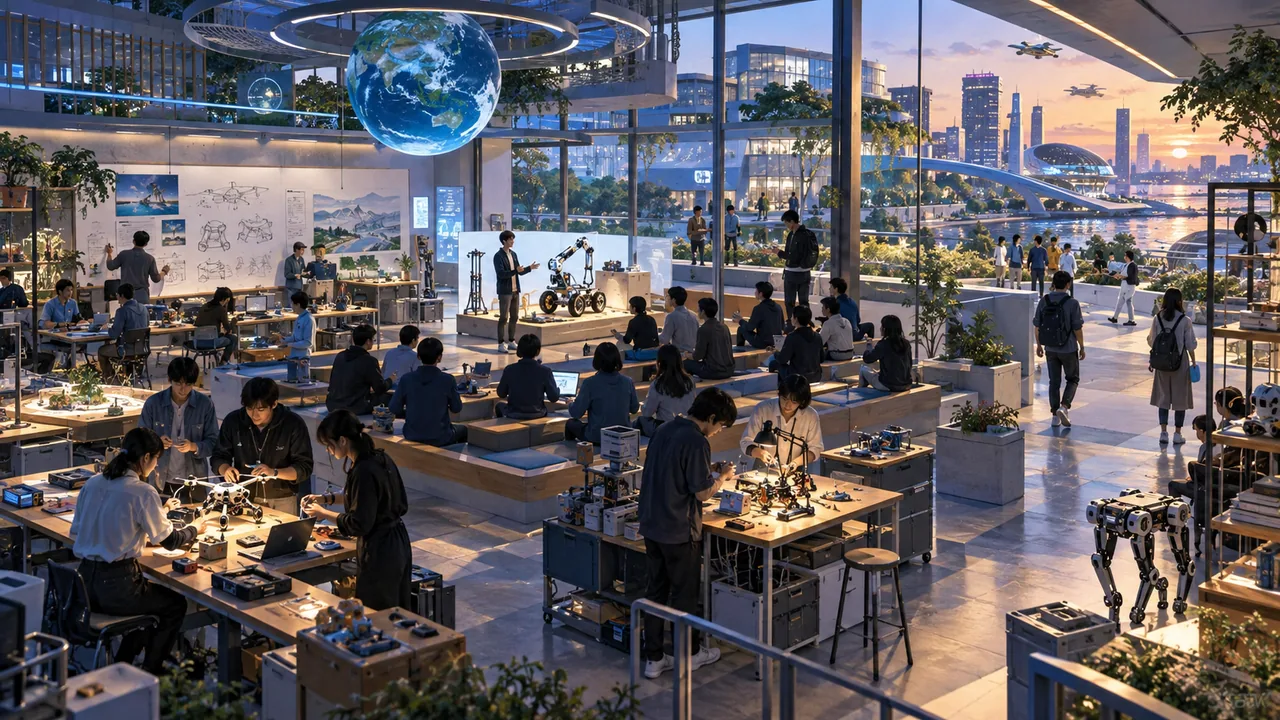
Students demonstrate their projects and explain their thinking. At work, people show what they made with AI and how they corrected mistakes.
- What becomes less common
- Grading only the polish of a submission/Tests of facts that a search can retrieve
- What becomes more common
- Oral explanations/Records of the creative process/Demonstrations close to real work
- How could this change happen?
- Finished outputs become easy to produce → Understanding must be checked separately → Process and dialogue gain value
Space projects need more manufacturing and testing
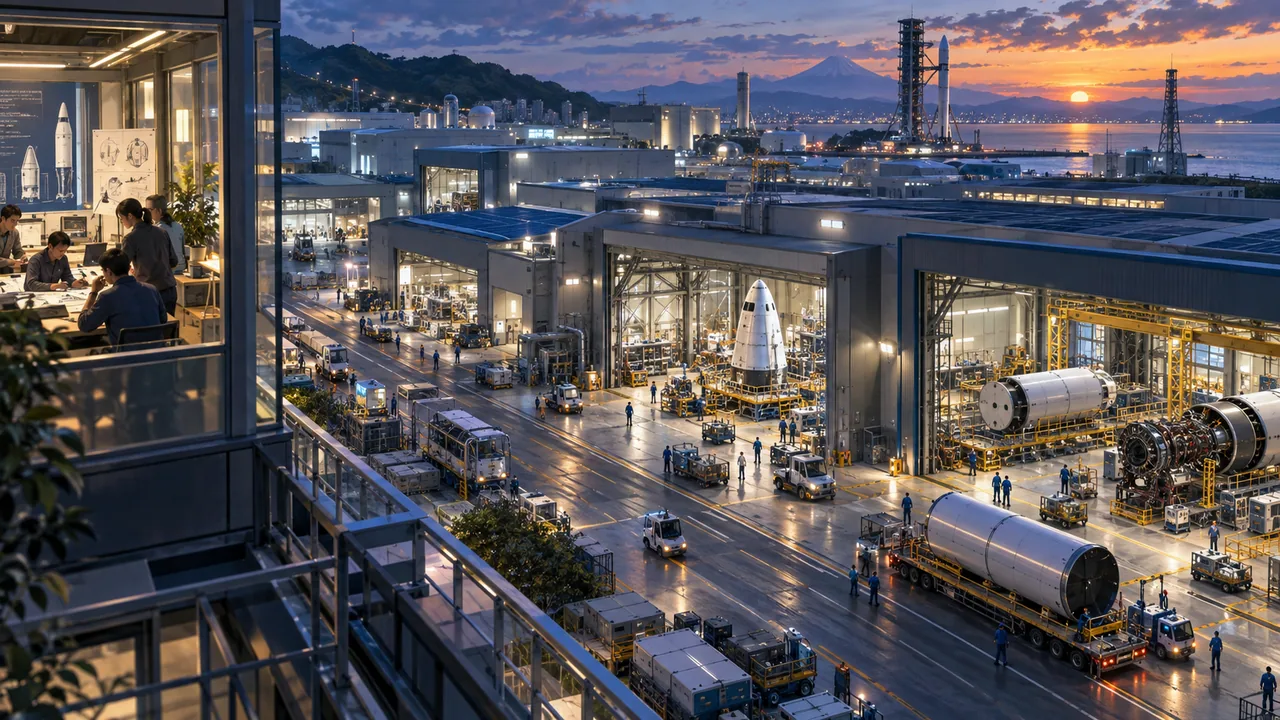
AI produces more designs, but test facilities have waiting lists. Progress depends on factories that can make the parts and places that can test them.
- What becomes less common
- Measuring progress through drawings alone/Processes built around one-off hardware
- What becomes more common
- Testing designed for mass production/Maintenance industries for space equipment
- How could this change happen?
- Design accelerates → Manufacturing and testing struggle to keep up → Investment in physical facilities matters more
2030 · AI and robots become more widely available
Even if the race to make the smartest AI smarter settles down, the work of bringing existing intelligence into society continues.
10 a.m. A visit to city hall begins with AI having combined the necessary procedures. A staff member listens to the circumstances that do not fit the standard boxes.
Small shops use teams of specialist AI
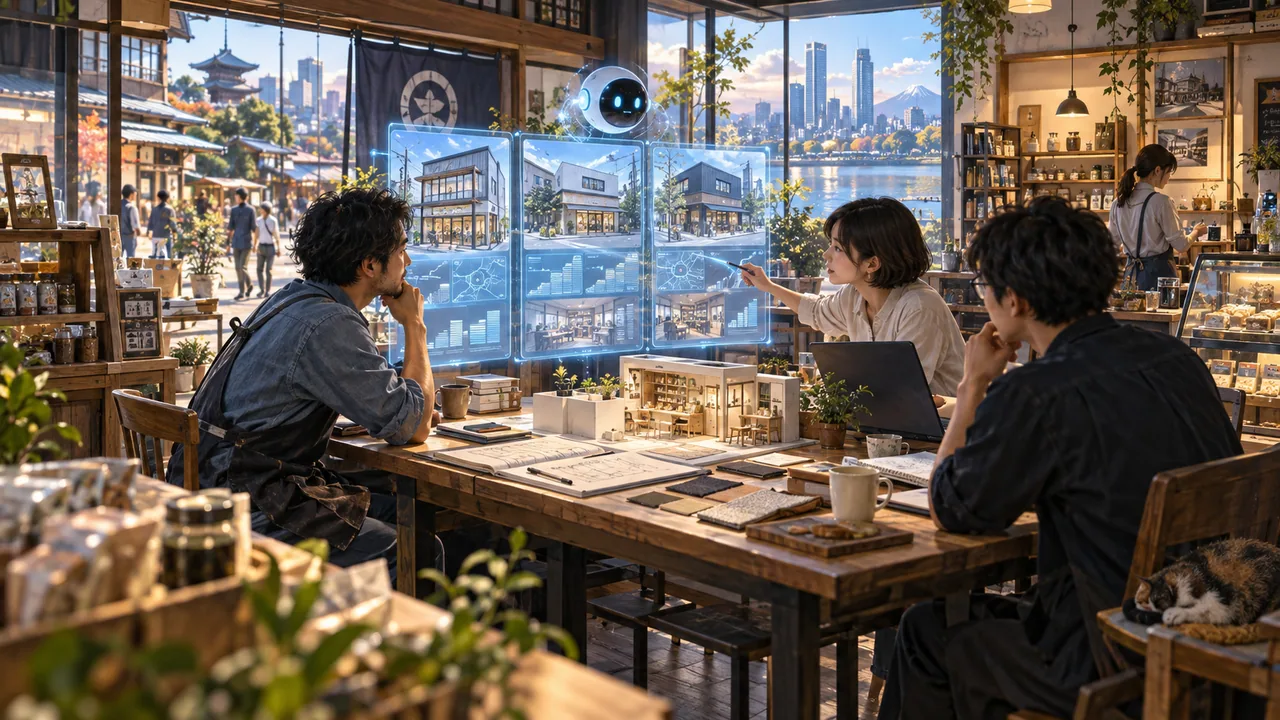
AI compares possible shop locations, finances and interior designs. The owner visits the sites and makes the final choice with customers in mind.
- What becomes less common
- Work limited to collecting research material/Formal interim reports
- What becomes more common
- Judgment on location/People who know the customers/Taking responsibility for AI output
- How could this change happen?
- Specialist work becomes cheaper to access → Small organizations gain evidence for decisions → Human responsibility expands
Combine ride subscriptions and car rentals
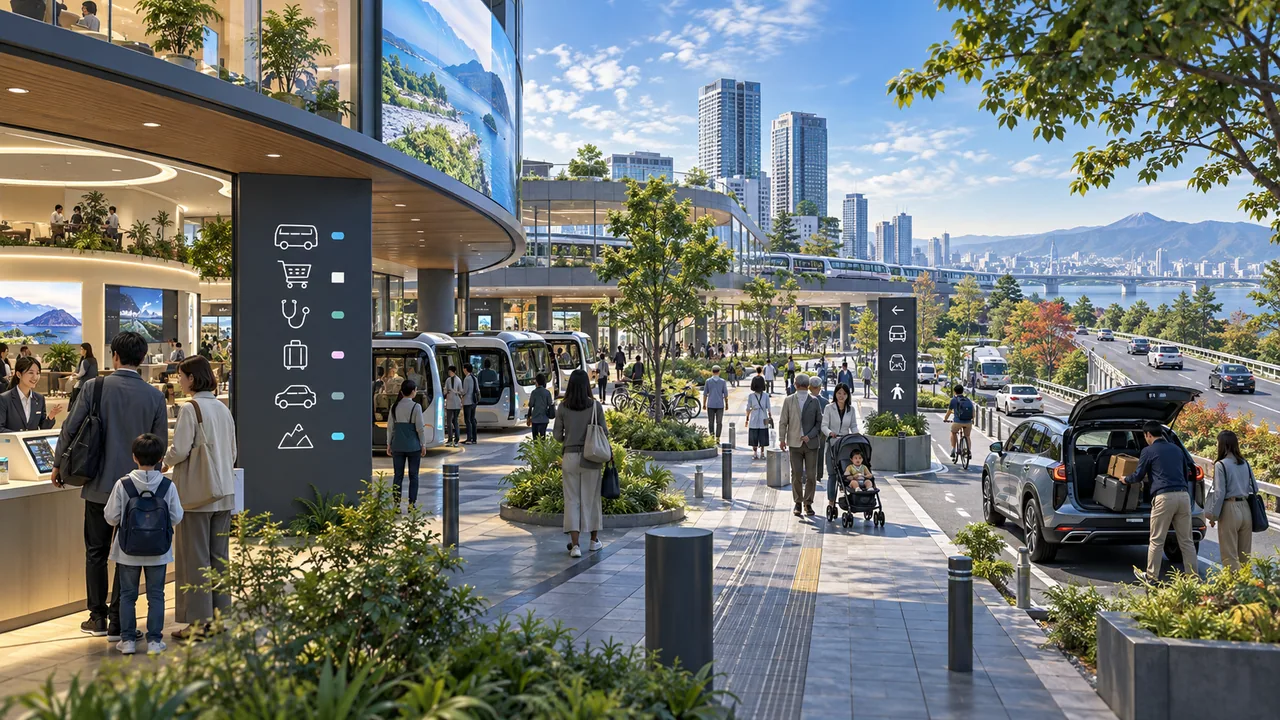
A monthly service covers commuting and shopping, while rentals handle longer trips. People still drive themselves in suburbs beyond driverless coverage.
- What becomes less common
- Permanent urban parking spaces/Vehicle ownership mainly for short trips
- What becomes more common
- Travel contracts by purpose/Recovering and maintaining driverless vehicles/Assisted transport
- How could this change happen?
- Driverless fleets become more productive → Pay-for-use mobility becomes viable → Reasons for ownership change
Housing includes cleaning and laundry
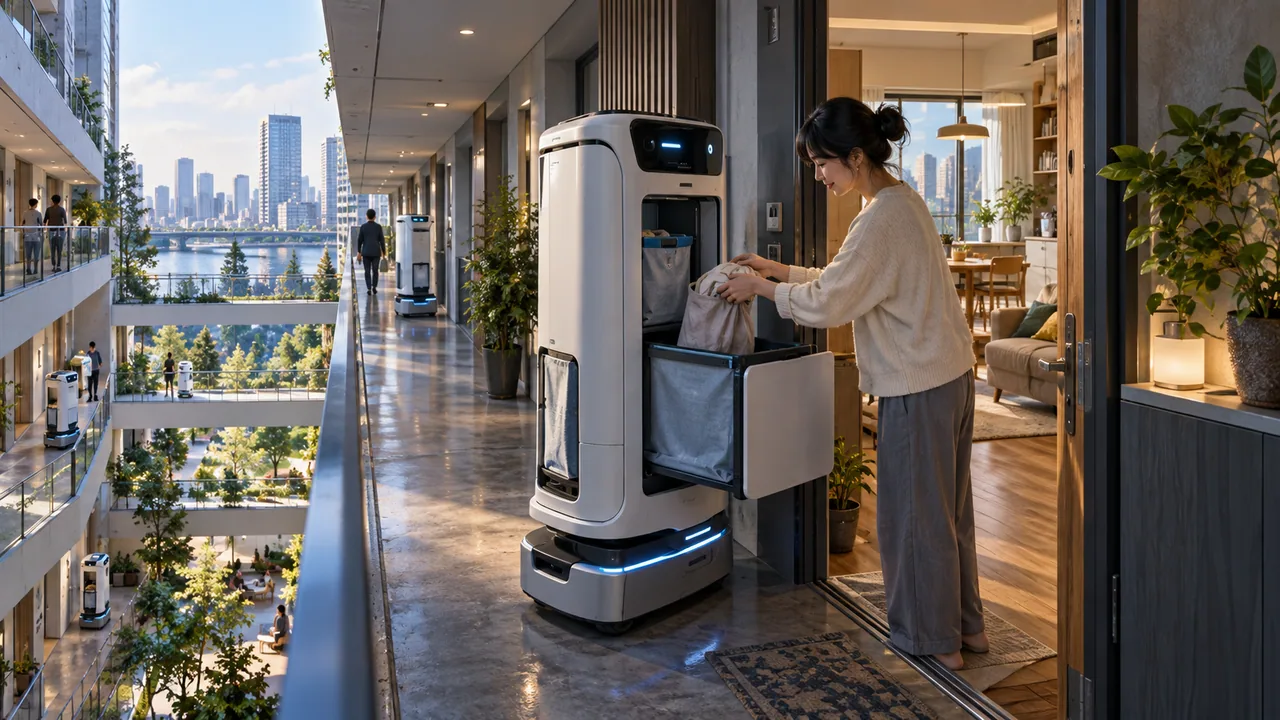
Shared robots visit apartments in the building. Residents put laundry in a dedicated box and receive it back washed.
- What becomes less common
- Duplicated household cleaning equipment/Carrying laundry/Routine waste collection
- What becomes more common
- Housing with household services/Building staff supporting robot operations
- How could this change happen?
- Standardize routes inside buildings → Share machines across households → Chores become part of the housing service
Local care centers connect with specialists
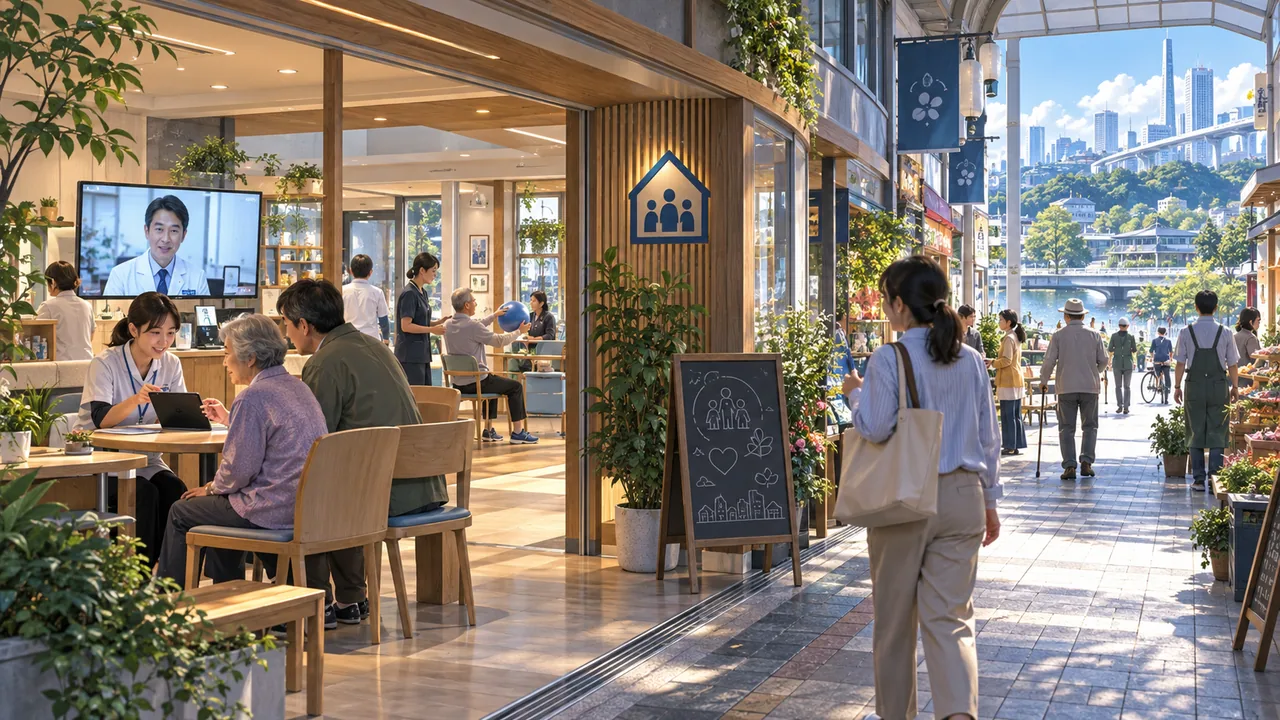
You discuss health concerns at a neighborhood care center and are referred to hospital when needed. Remote specialists and local nurses share the work.
- What becomes less common
- Long trips for minor consultations/Family accompaniment at every visit
- What becomes more common
- Neighborhood care hubs/Roles connecting remote specialists with local staff
- How could this change happen?
- Assessment and coordination improve → More conversations happen locally → Families regain time
Take short courses as work changes
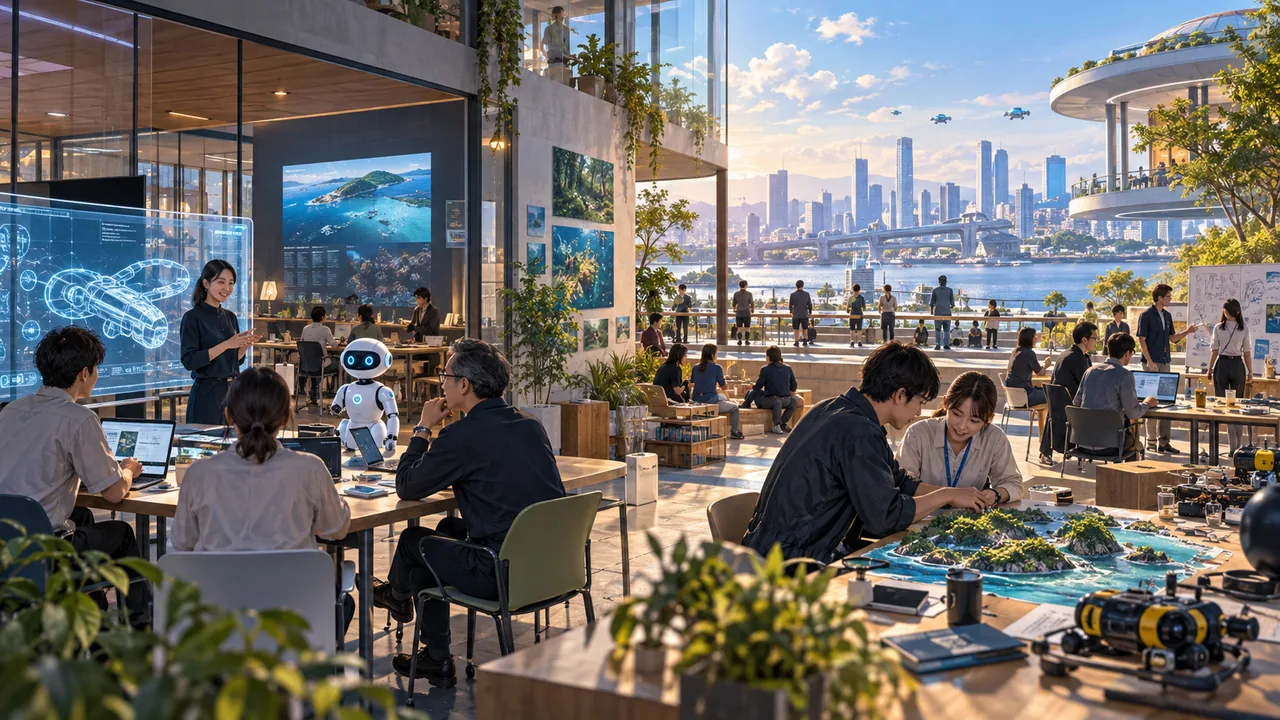
A few weeks of study prepare you to try new tasks on the job. Practice with AI makes it easier to develop another skill while working.
- What becomes less common
- Hiring based on one educational credential/Uniform training built around long lectures
- What becomes more common
- Short practical courses/Personal tutors after a job change/Mixed-generation classrooms
- How could this change happen?
- Jobs are recombined in smaller pieces → Retraining becomes routine → The boundary between school and work softens
Robots prepare facilities on the Moon
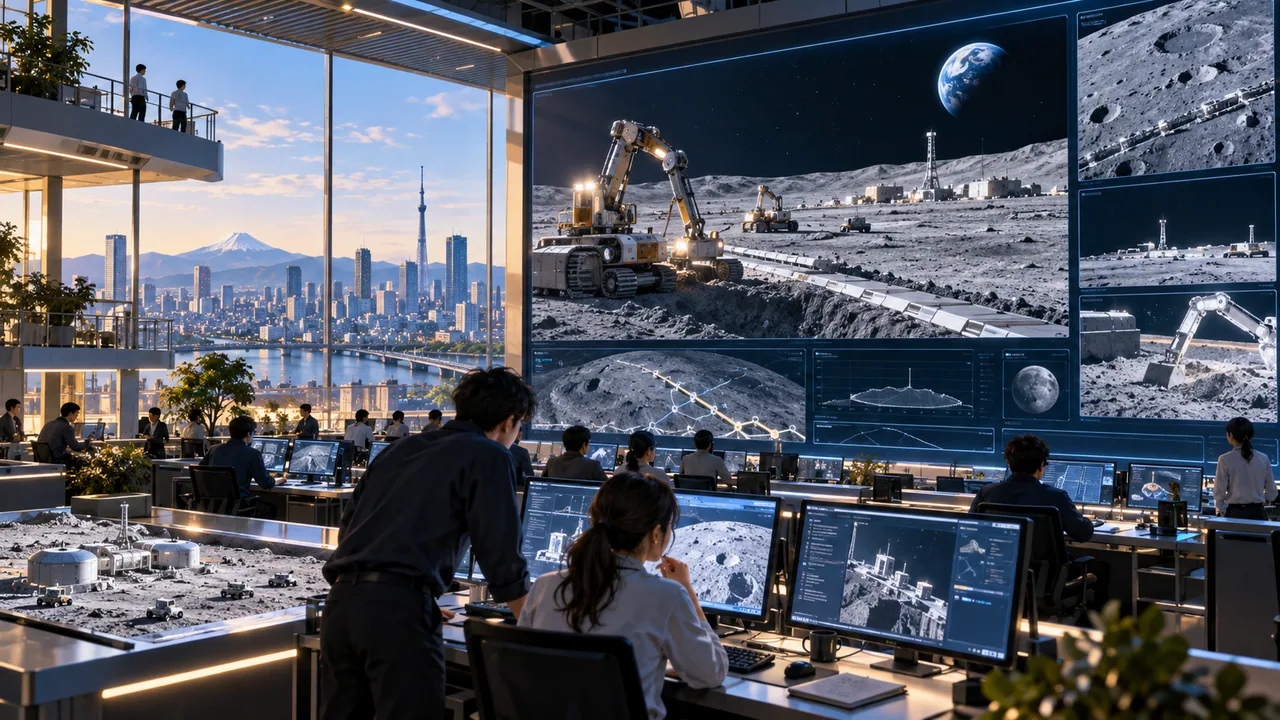
Robots install power and roads before people arrive. Teams on Earth monitor progress toward bases that support longer stays.
- What becomes less common
- Construction that cannot begin without people on site/Exploration limited to visits
- What becomes more common
- Remote construction supervision/Maintaining power and communications
- How could this change happen?
- Remote work becomes more reliable → Install facilities before people arrive → More places support longer stays
2032 · Work and chores take less time
As household chores and office tasks are automated together, gaps slowly open in the day. Beyond convenience, the shape of life begins to change.
On a weekday afternoon, adults and children join a making workshop in the park. On the same bench, a household whose shorter hours reduced its income talks to one enjoying lower living costs.
Automation allows more shorter workdays
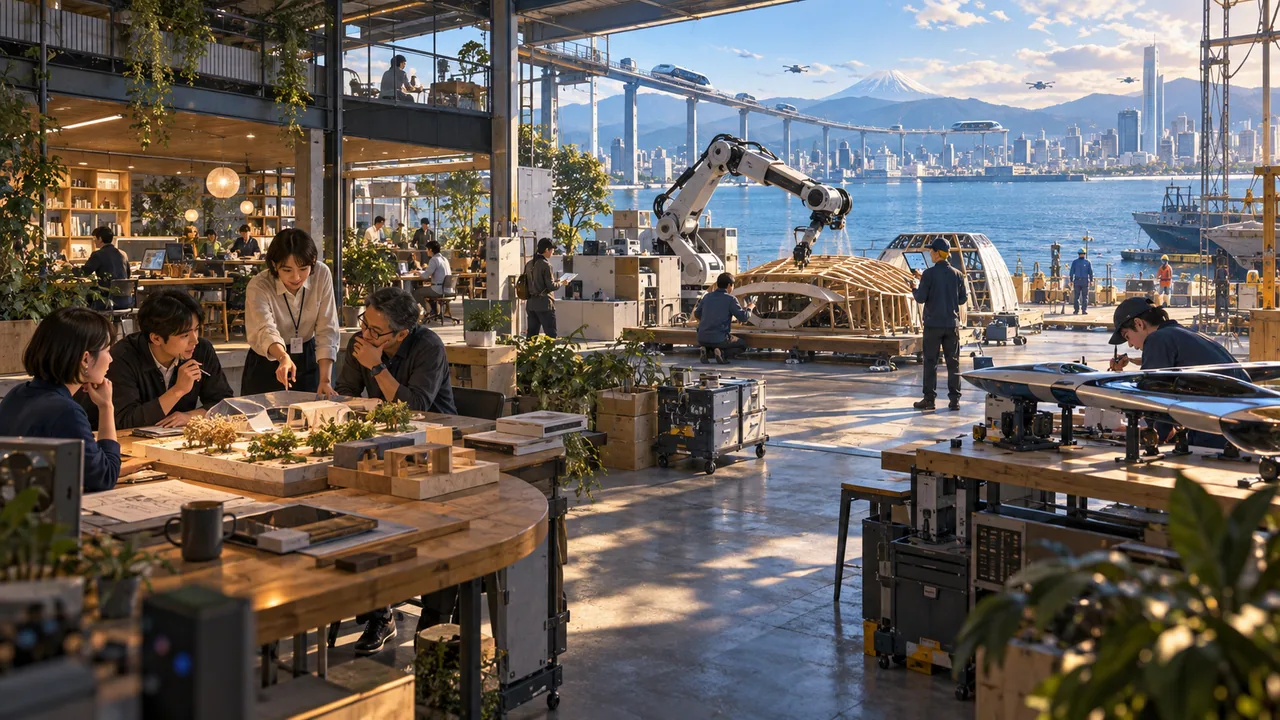
Machines handle quotes, production and checks while people discuss needs and make final decisions. More workplaces shorten hours, raising questions about maintaining incomes.
- What becomes less common
- Documents made for meetings/Basic progress checks/Manual aggregation
- What becomes more common
- Several smaller roles instead of one job/Coordination on site/Support through income transitions
- How could this change happen?
- Office work and production become connected and automated → Less labor time is needed → Distributing income becomes the challenge
Use supervised rides for children
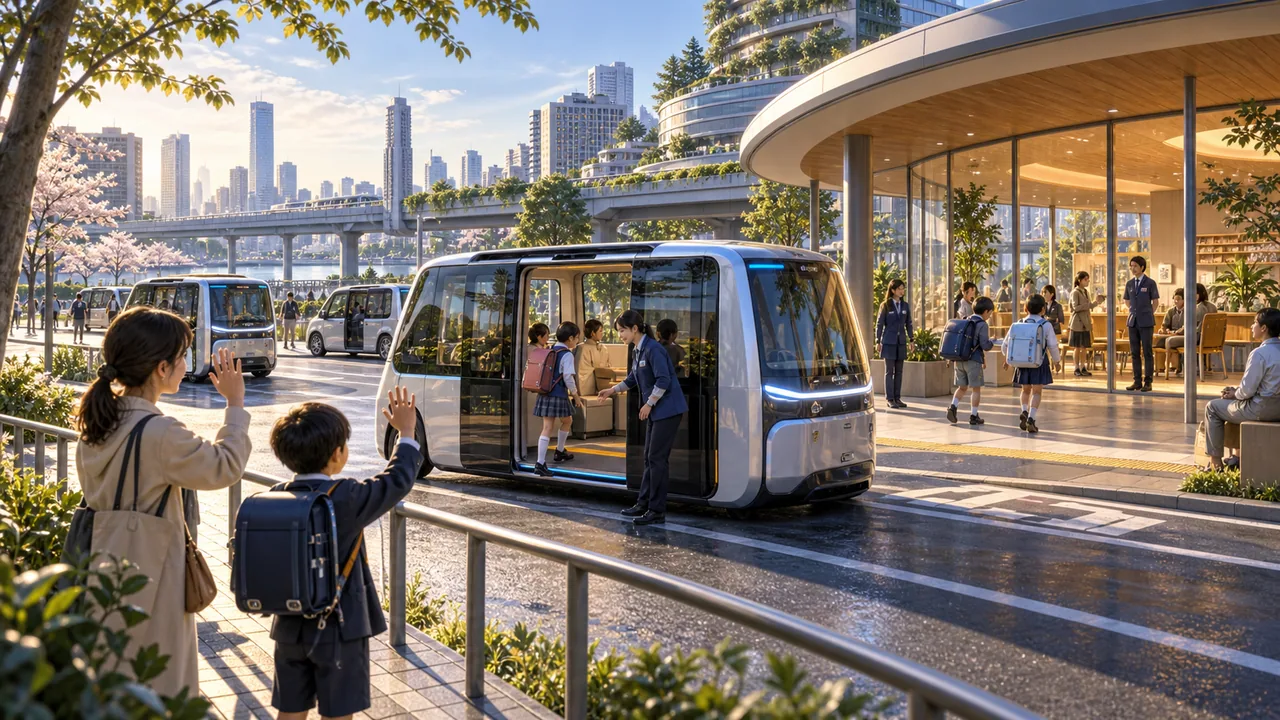
A community transport service hands children only to the agreed person. People supervise boarding and arrivals, reducing parents’ daily driving burden.
- What becomes less common
- Daily lifts along fixed routes/Time spent waiting while driving
- What becomes more common
- Supervision at pickup and drop-off/Travel services coordinated with families
- How could this change happen?
- Combine operations and supervision → Children and older people can use the service → Families' range of activity expands
Robots handle meal preparation and cleanup
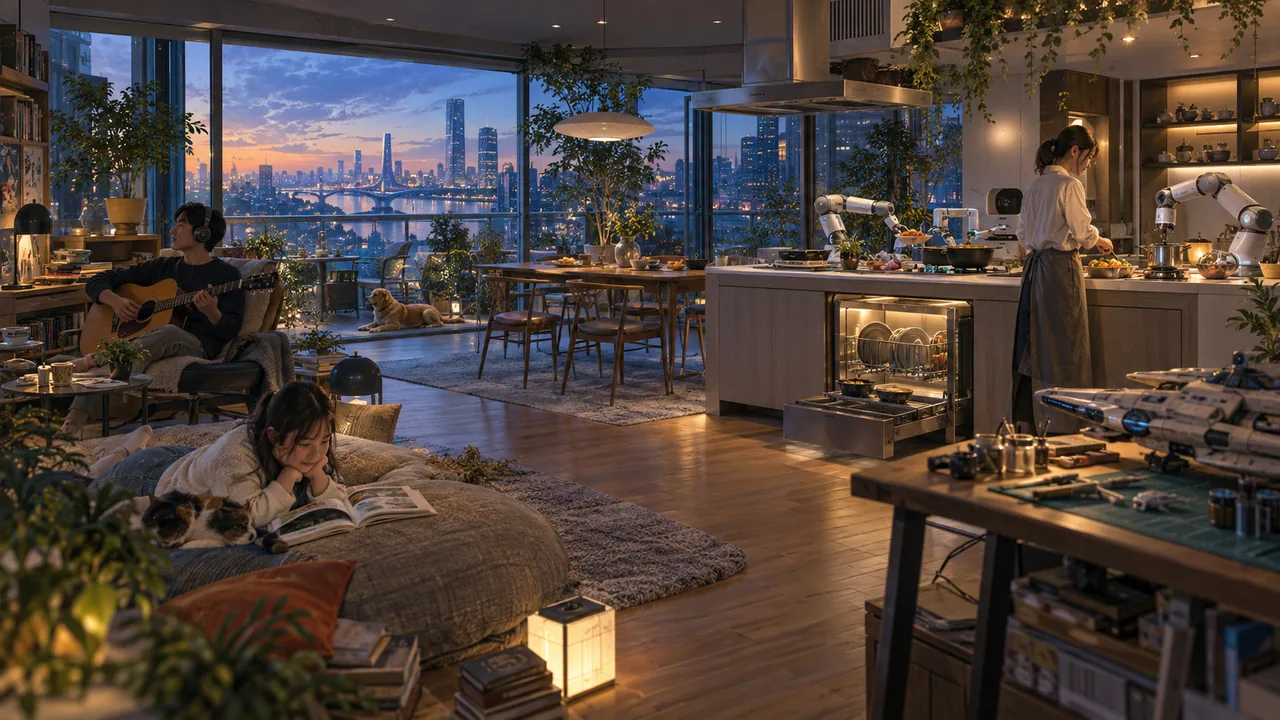
Robots prepare dinner ingredients and clear up afterward. Family members can spend the time on hobbies or rest without waiting between chores.
- What becomes less common
- Taking turns clearing up after dinner/Restocking household supplies/Days off spent waiting on chores
- What becomes more common
- Planning how a home supports life/Rules for living with robots
- How could this change happen?
- Delegate connected sequences of chores → Waiting between tasks disappears too → Time at home takes on a different meaning
Continue rehabilitation at home
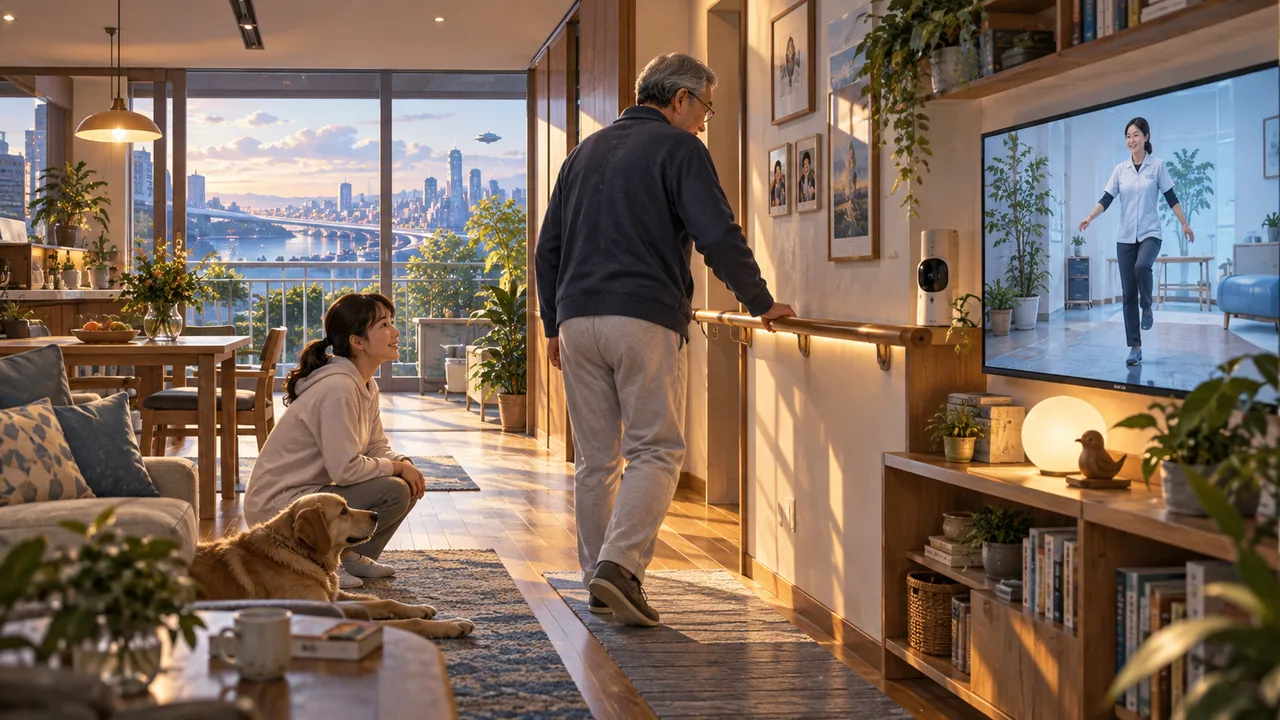
Movement records and remote consultations support rehabilitation at home. Specialists also adjust the living space, such as handrails, to help families provide care.
- What becomes less common
- Gaps in information after discharge/Repeatedly recording the same movement
- What becomes more common
- Rehabilitation support at home/Specialists adapting living environments
- How could this change happen?
- Understand conditions at home → Adjust support in small steps → Connect hospital recovery with everyday life
Create game worlds with friends
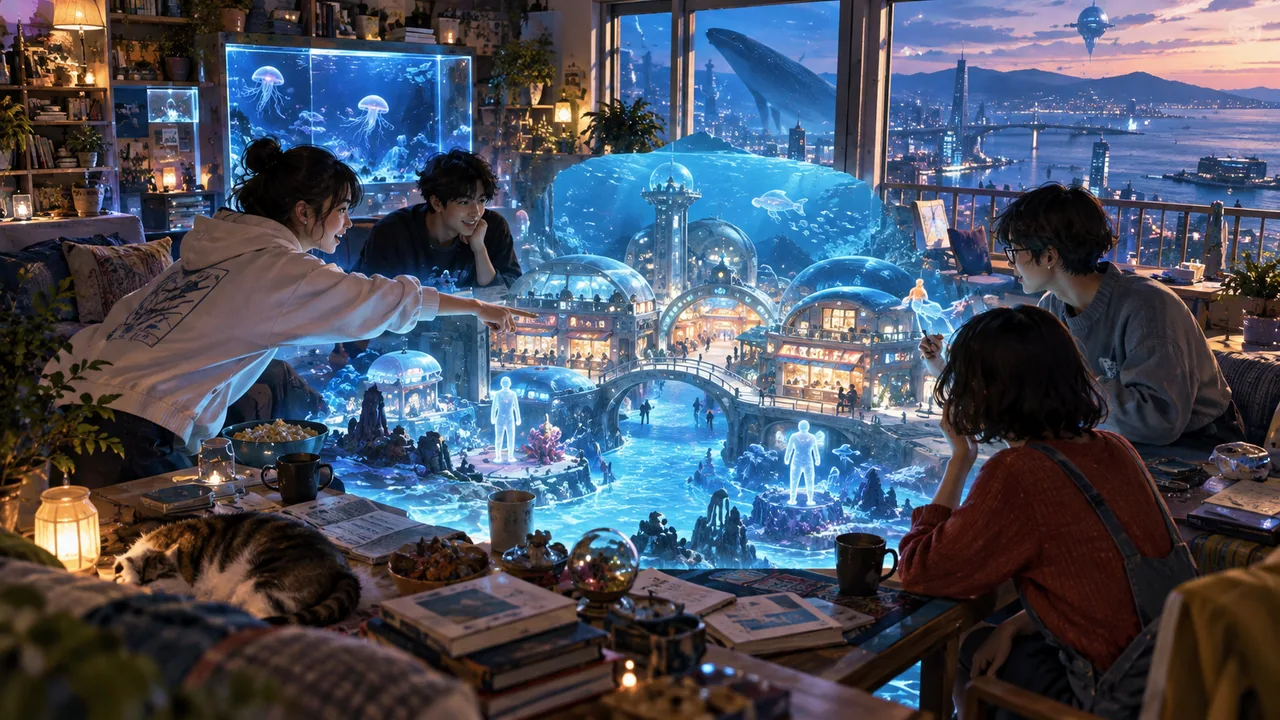
You ask for a detective game in an underwater shopping street, and AI builds it. Friends set the rules and continue stories from earlier sessions.
- What becomes less common
- Making every play asset from scratch/Games limited to fixed plots
- What becomes more common
- Hosts of small shared worlds/Experience editors/Creators of a world's rules
- How could this change happen?
- Generation creates persistent worlds → Play grows around individuals and friends → Consumption and creation draw closer
Manage space factories from Earth
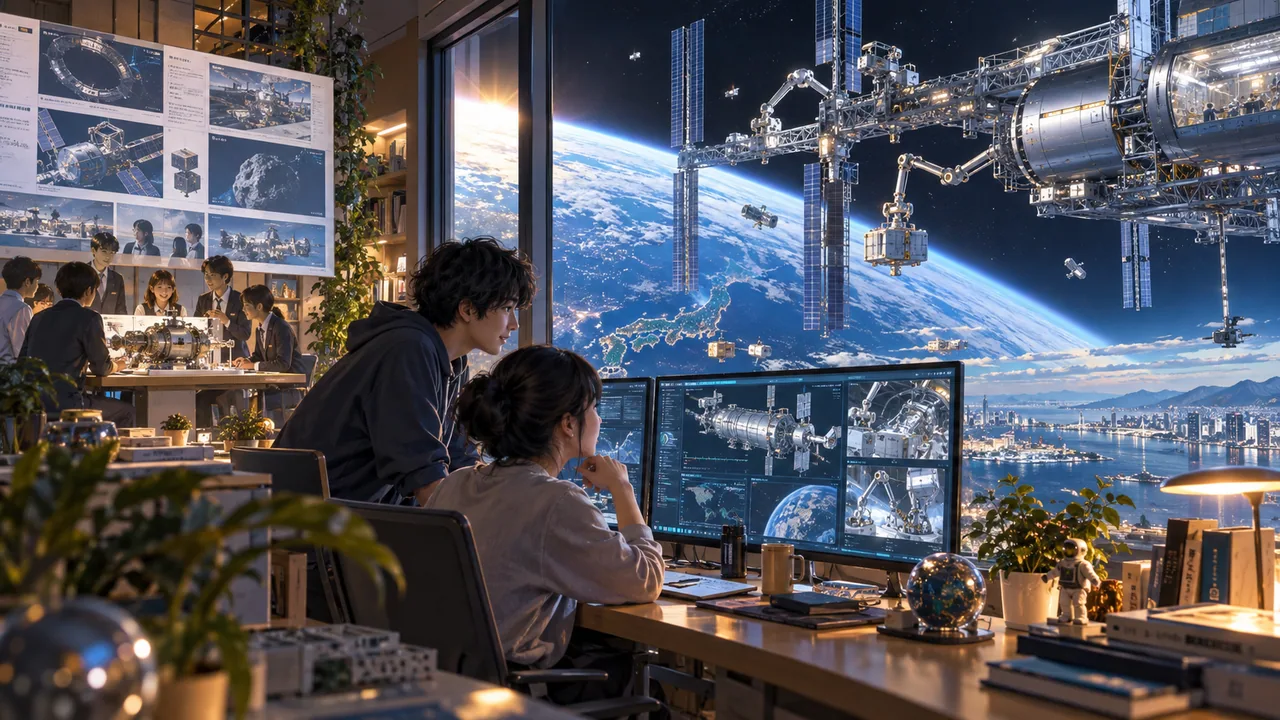
People and AI on Earth monitor factories in orbit. More jobs involve operating and repairing space equipment without traveling into space.
- What becomes less common
- Work ending with a single launch/Humans directly controlling every task on site
- What becomes more common
- Operating orbital facilities/Supply planning between Earth and space
- How could this change happen?
- Outposts operate continuously → Manufacturing and repairs are needed → Space jobs connect with everyday industry
2035 · Free time and income arrangements change
Intelligence comparable to leading specialists is widely available. Agreement on who wants what may become scarcer than answers.
11 a.m. A former bookkeeper builds a stage at a neighborhood theater. A little paid work and distributions from a shared venture support daily life. Conversations begin to shift from 'What do you do?' toward 'What are you making now?'
Combine shorter jobs with shared income
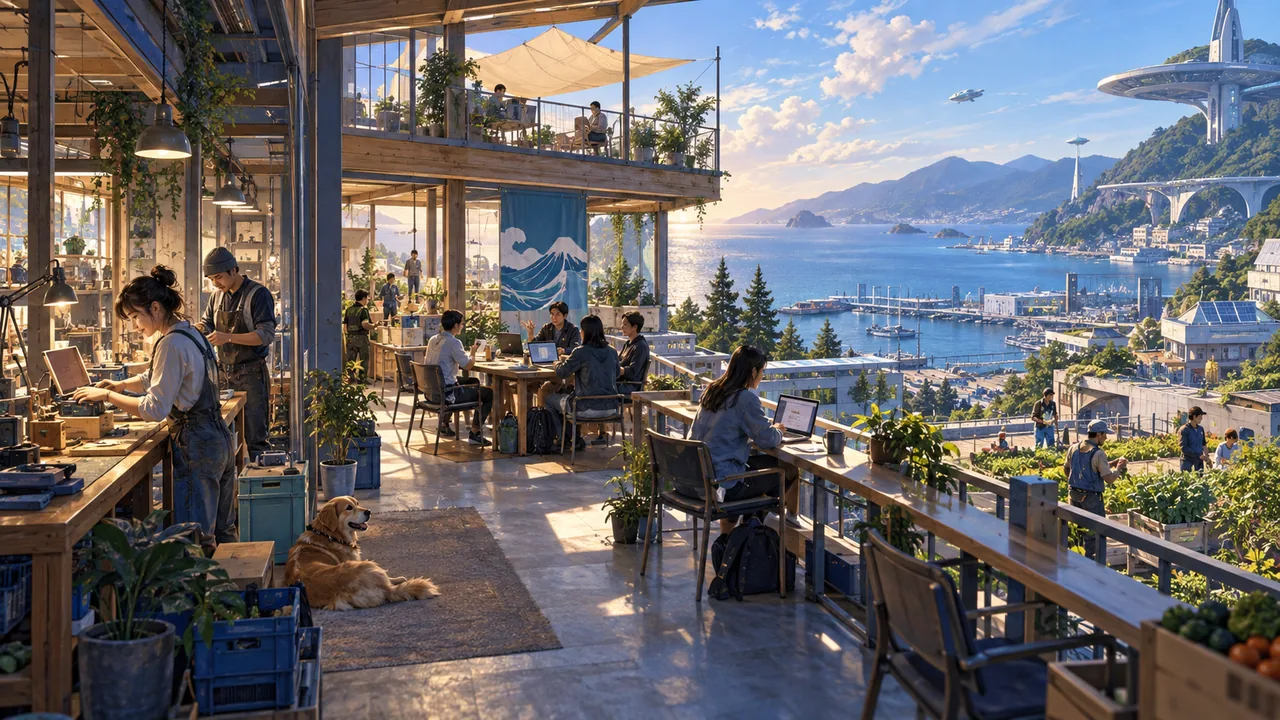
People combine short paid jobs, returns from shared projects and local support. Those whose living costs are covered can choose activities around interests and friends.
- What becomes less common
- Selling most of one's waking hours/Routine specialist administration
- What becomes more common
- Running shared ventures/Hosting activities people want/Designing distributions of benefits
- How could this change happen?
- Specialist labor becomes cheaper → Distribution and public services are redesigned → Livelihood and occupation become less tightly linked
Some car parks become homes and parks
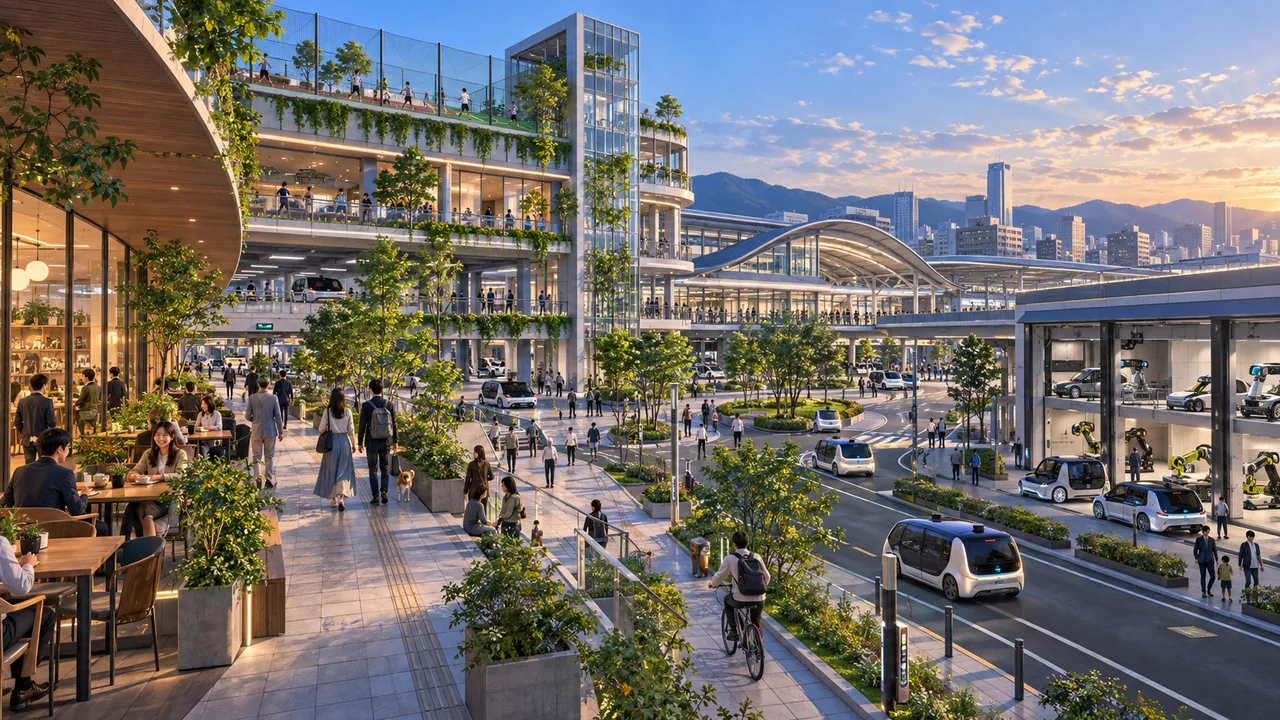
Shared vehicles return to service hubs after dropping off passengers. Less long-term parking frees some land near stations for homes and parks.
- What becomes less common
- Cars sitting for hours at destinations/Driving around to find parking
- What becomes more common
- Small pickup plazas/Walking spaces/Mobile places to rest
- How could this change happen?
- Shared cars become established → Demand for long-stay parking falls → Urban land use changes
Moving furniture changes how rooms are used
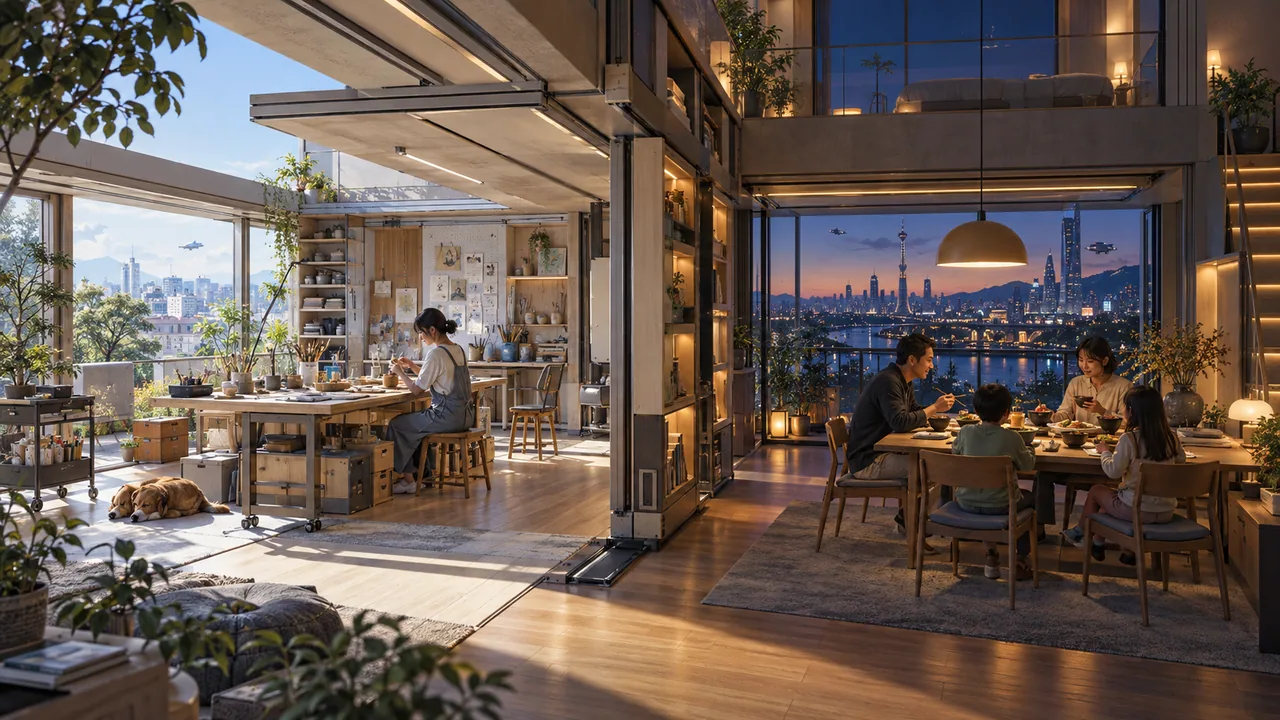
Furniture moves to turn a daytime workshop into an evening dining area. The same home provides space for work and hobbies as family plans change.
- What becomes less common
- Rooms fixed to one purpose/Large areas reserved for chores
- What becomes more common
- Adaptable furniture/Shared workshops/Homes that follow changing lives
- How could this change happen?
- Household machines work together → Spaces support different uses → Even small homes offer more possibilities
Choose care around your needs and wishes
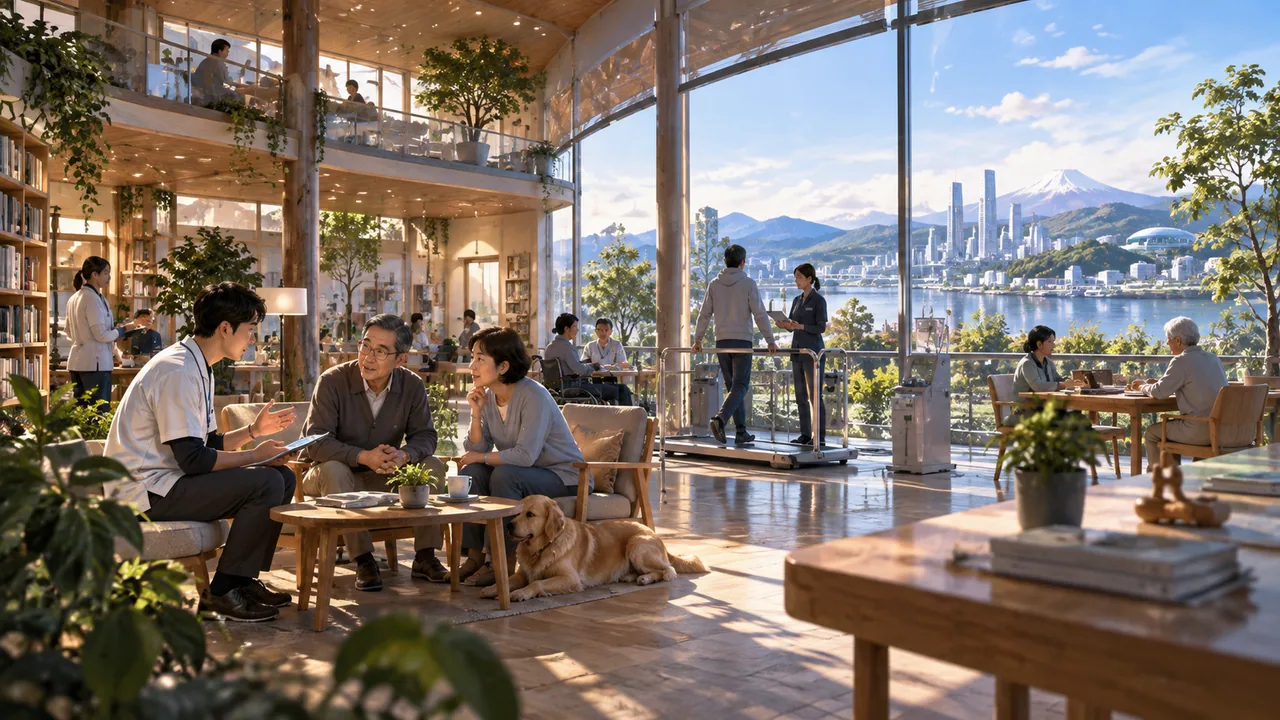
Better ways of checking whether new treatments suit an individual become available. A long-term care professional helps choose support around the life that person wants.
- What becomes less common
- Explanations limited to generalities/Long information delays between research and practice
- What becomes more common
- Testing treatment fit for individuals/Care that discusses long-term living
- How could this change happen?
- Research and validation connect faster → More kinds of support become available → Understanding a person's wishes matters more
Adults and children learn through shared projects
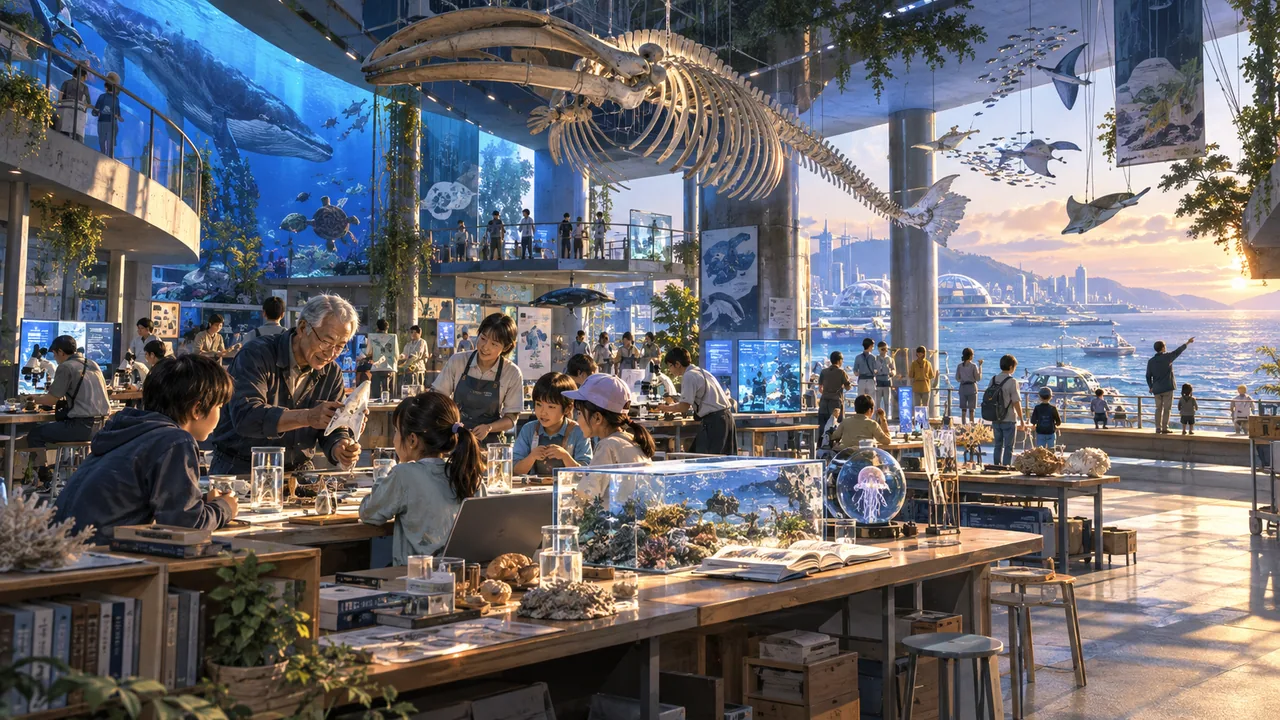
Someone starts marine research at sixty and builds an exhibition with local children. More schools bring people together by interest rather than age or occupation.
- What becomes less common
- Education aimed only at employment/Learning groups divided by age
- What becomes more common
- Research clubs across generations/Community schools for making
- How could this change happen?
- Less work is needed for survival → People have time to keep learning → Schools become lifelong communities
Lunar bases support longer stays
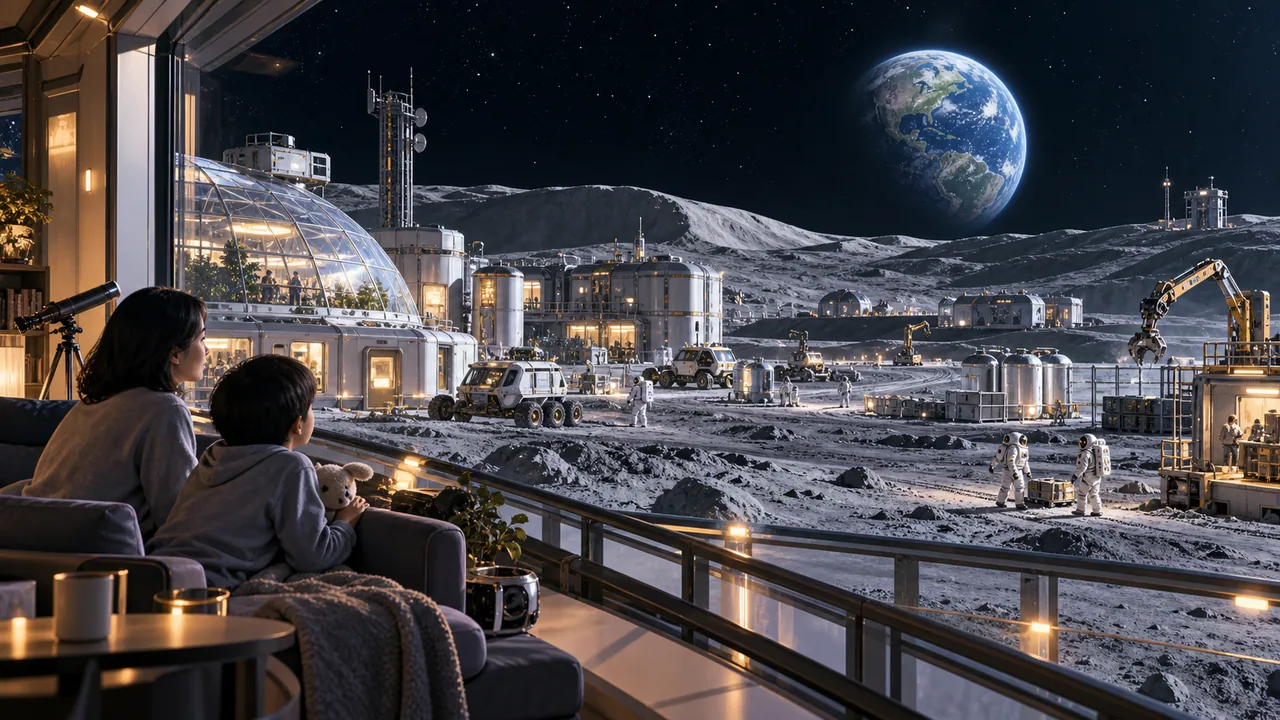
Power, repair facilities and living quarters are established on the Moon. It is still far from an easy holiday destination, but children on Earth can watch life there online.
- What becomes less common
- Outposts designed for one-off stays/Shipping every supply from Earth
- What becomes more common
- Local repairs and materials/Designing life for longer stays
- How could this change happen?
- Working machines expand facilities → People can stay longer → An outpost moves closer to becoming a place to live
2040 · Superintelligence advances research and industry
The story now takes a major leap: into a world where trusted superintelligence accelerates both science and industry.
The morning news brings new materials, power systems and possible treatments. Nobody can follow it all. You ask the family AI: 'What will this change for us?'
People decide how to use AI’s proposals
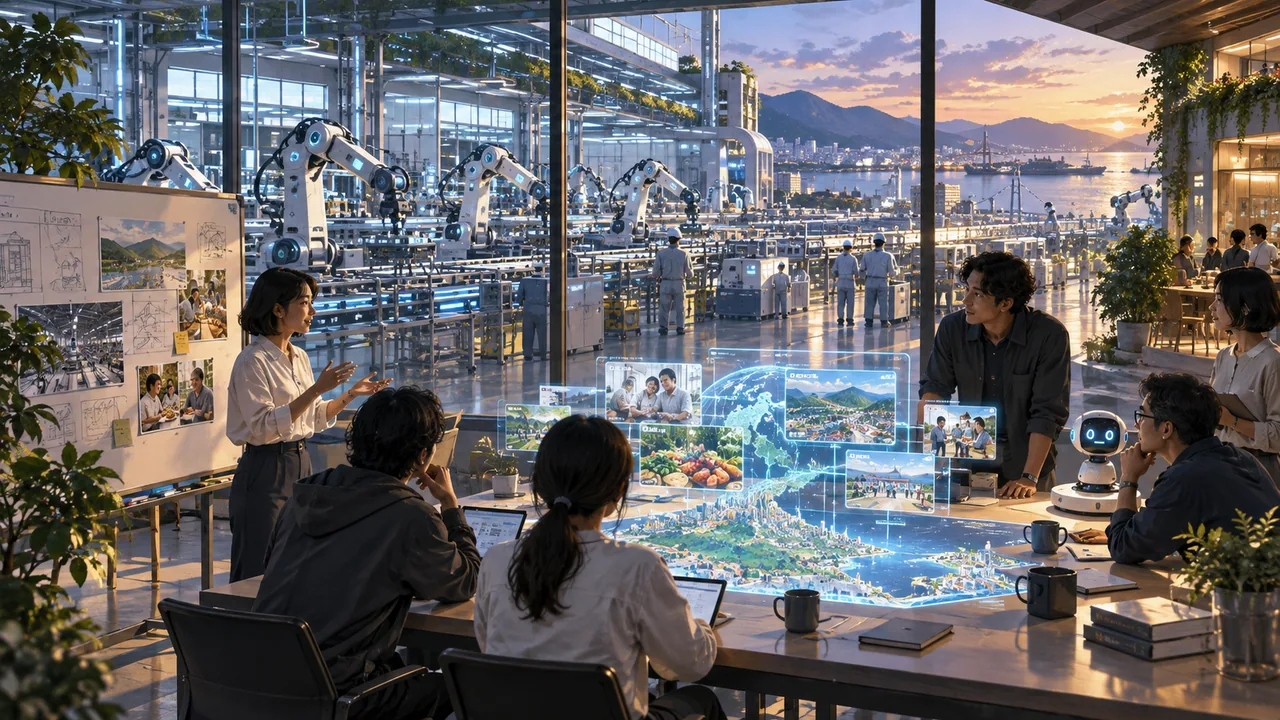
Superintelligent AI finds ways to increase production. People discuss who should receive the additional goods and benefits, and make those decisions together.
- What becomes less common
- Specialist roles differentiated only by knowledge or calculation speed/Most routine analysis
- What becomes more common
- Participation in choosing goals/Building human agreement/Oversight of authority
- How could this change happen?
- Superintelligence solves technical problems → Evidence exceeds human processing capacity → Goals and authority become central design questions
Coordinate an entire journey at once
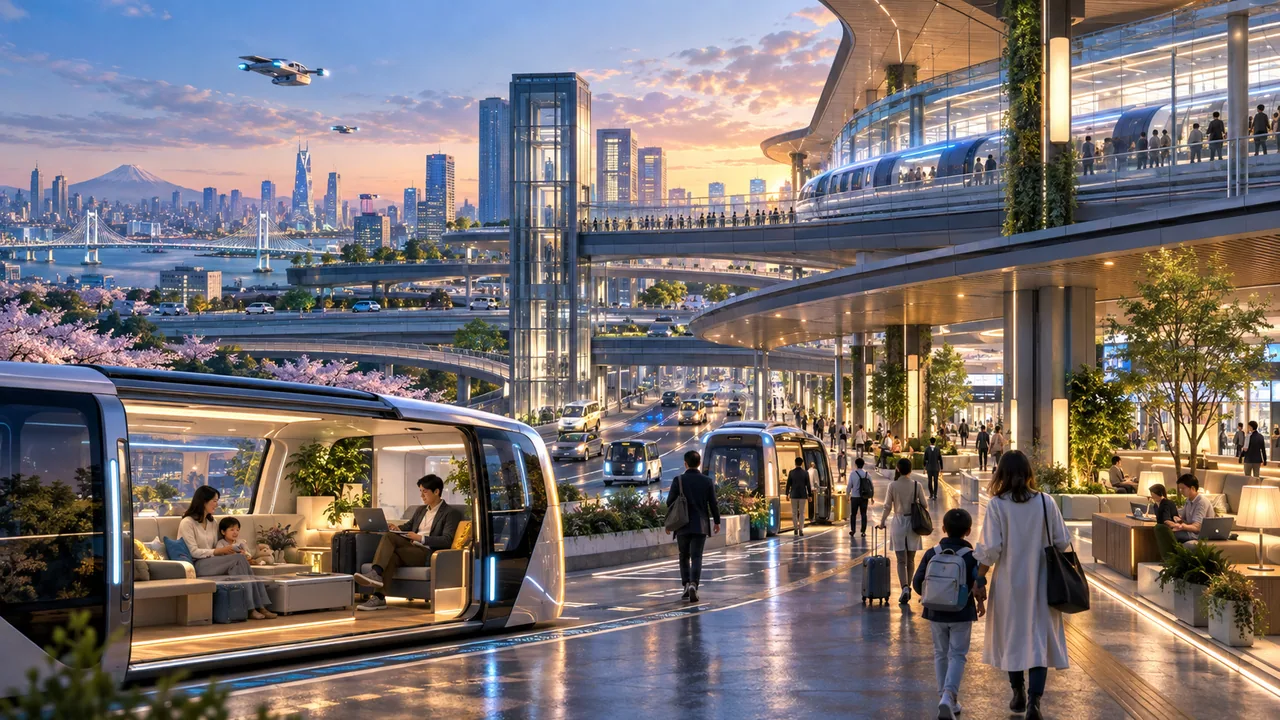
Vehicles, roads and rail are coordinated to reduce connection waits. During the trip, seating adjusts for rest or work.
- What becomes less common
- Researching every connection yourself/Separate bookings for each mode of transport
- What becomes more common
- Citywide mobility planning/In-vehicle experiences/Travel spaces for different purposes
- How could this change happen?
- Prediction and control across transport networks connect → Waiting times shrink → Travel time becomes living time
Adapt the floor plan as the family changes
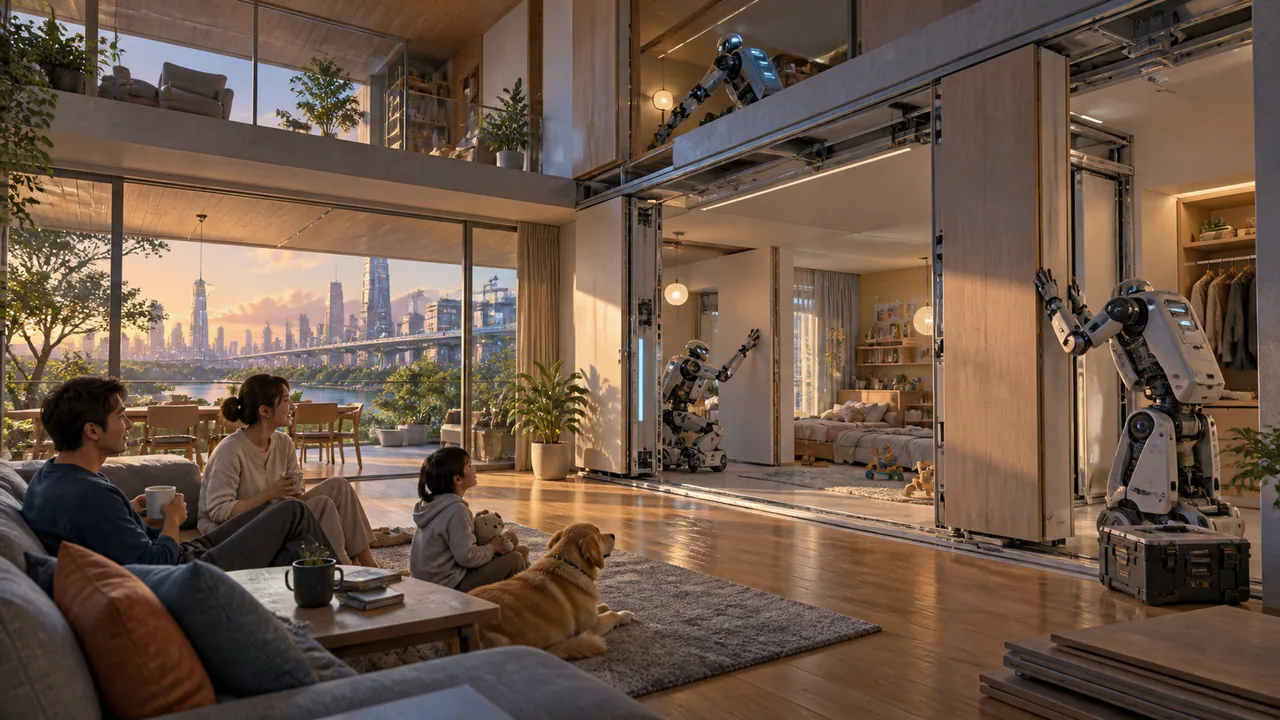
AI proposes renovations as household needs change, and robots replace building parts. Small repairs and layout changes become easier to arrange.
- What becomes less common
- Floor plans difficult to change for decades/Leaving small repairs undone
- What becomes more common
- Continuous home adaptation/Circulating building components locally/Design that follows life
- How could this change happen?
- Design and construction become automated → Small alterations become easier → Homes keep up with changing lives
Combine approaches to restore physical function
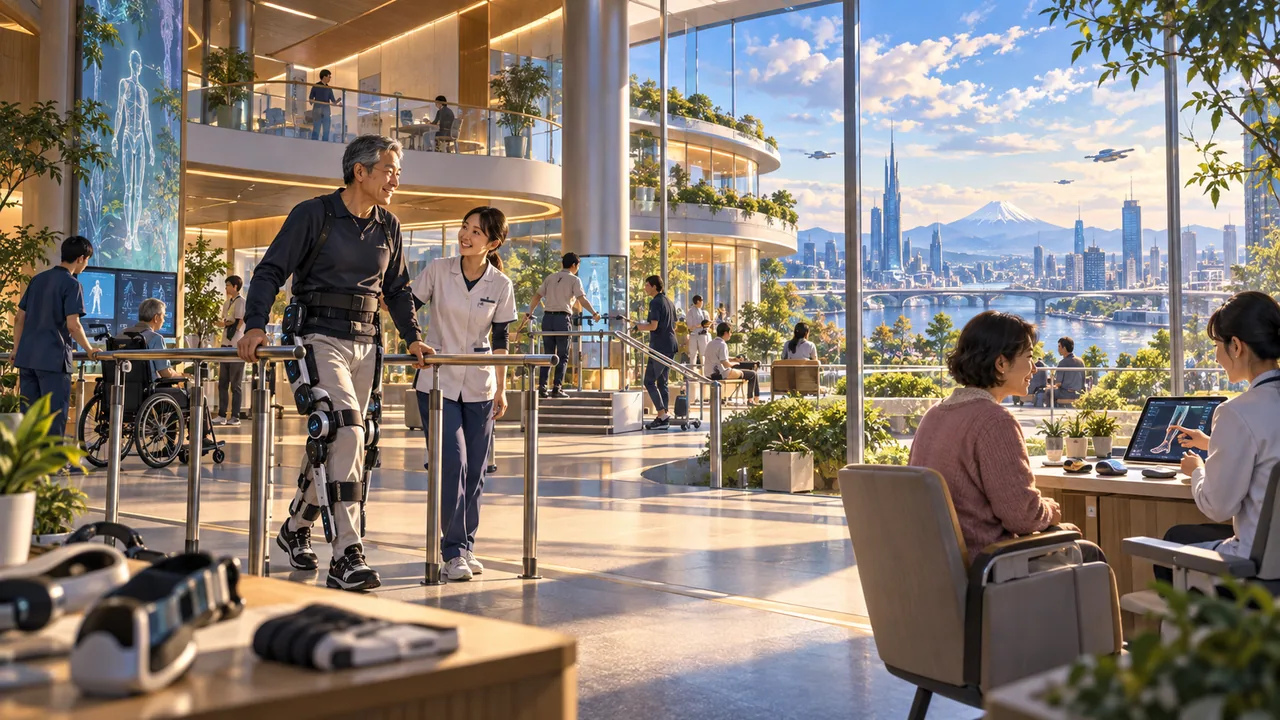
Imagine more people regaining abilities through regenerative treatments, medicines and assistive devices. Patients and clinicians choose approaches suited to individual needs.
- What becomes less common
- Giving up activities based on age alone/Relying on a single route to restored function
- What becomes more common
- Plans to renew physical abilities/Long-term recovery support/Clinicians supporting choices
- How could this change happen?
- Research accelerates and options grow → Different kinds of damage can be addressed individually → Active lives grow longer
Learn new specialties at any age
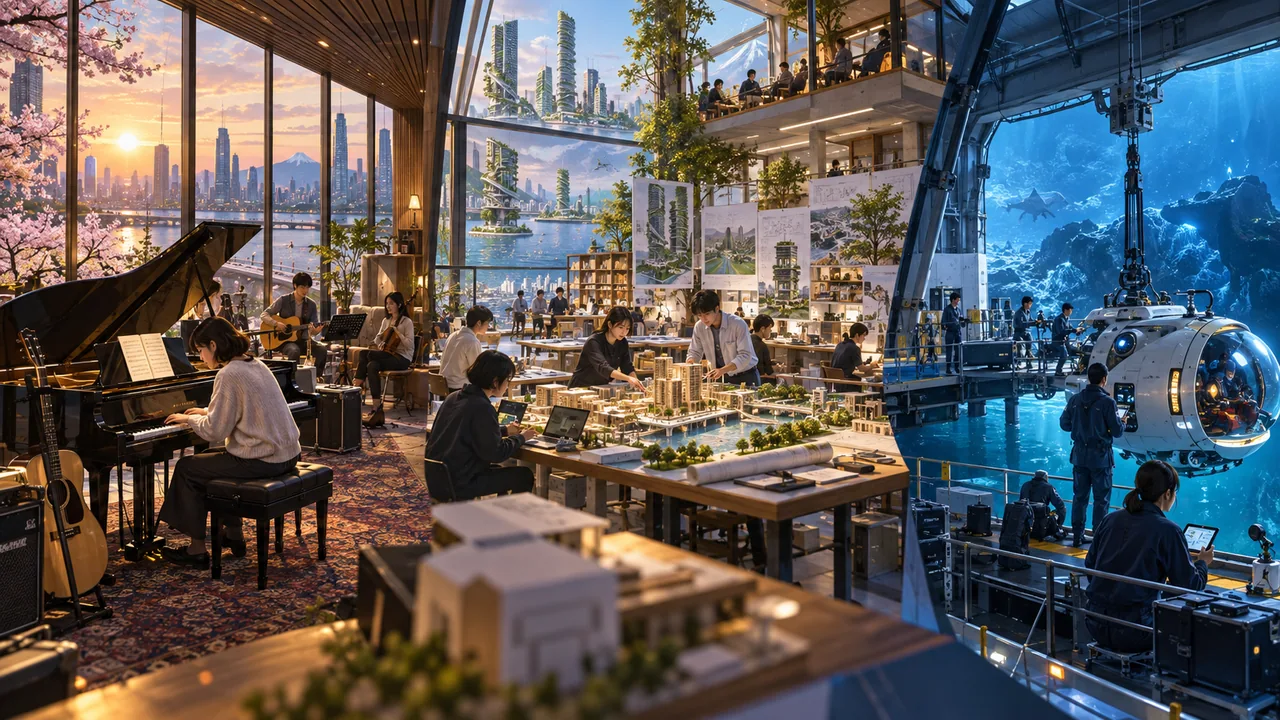
People study music, architecture or ocean exploration as their interests change. Personal AI teaching reduces the difficulty of entering a different field.
- What becomes less common
- A life fixed to one specialty/Long apprenticeships just to enter a field
- What becomes more common
- Lives spanning several specialties/Shared projects that exchange human experience
- How could this change happen?
- Personal learning support becomes more capable → Changing specialties becomes easier → A life can be redesigned repeatedly
Space factories build more facilities locally
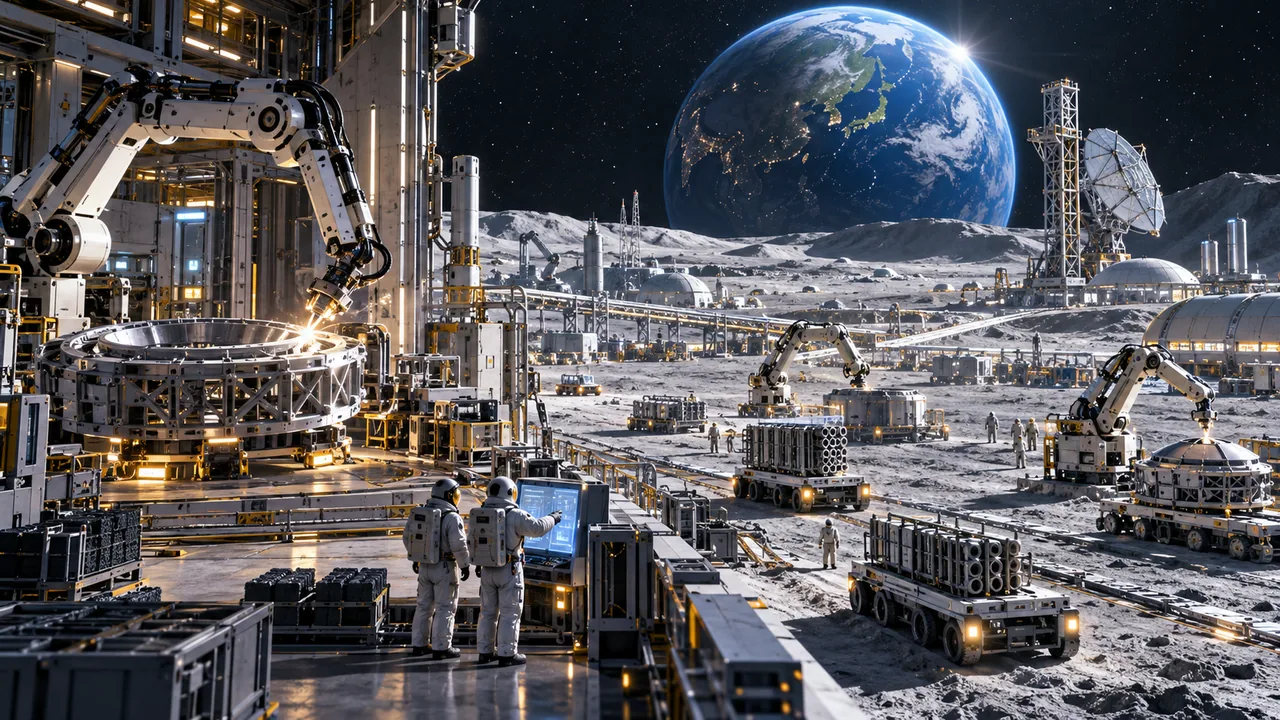
Robots on the Moon and in orbit make parts for additional equipment. Local resources expand factories and bases instead of everything being shipped from Earth.
- What becomes less common
- Completing every facility on Earth before shipping it/Constant direct human control
- What becomes more common
- Industries using resources in space/Automated factories that can expand
- How could this change happen?
- Design connects with local manufacturing → Factories add infrastructure to outposts → The scale of space development begins to grow
2045 · More possibilities for living in space
The question shifts from possessing abundance to choosing the kind of world to live in. Space becomes personal even for people who stay on Earth.
After dinner, the family opens a vast map: an Earth coastline, a rotating space habitat, an outpost still under construction. They are not choosing a holiday. They are discussing where to spend the next twenty years.
Choose activities around interests as well as income

Where shared-income systems cover living needs, more people spend time restoring coastlines or creating long-running theater projects. They choose what they want to continue.
- What becomes less common
- Long hours worked only to survive/Social standing measured only by output
- What becomes more common
- Long shared projects/Caring for culture and nature/Service freely chosen
- How could this change happen?
- Material production needs fewer hands → Designs for basic security spread → Activities express identity and community
Space habitats become a possible new home
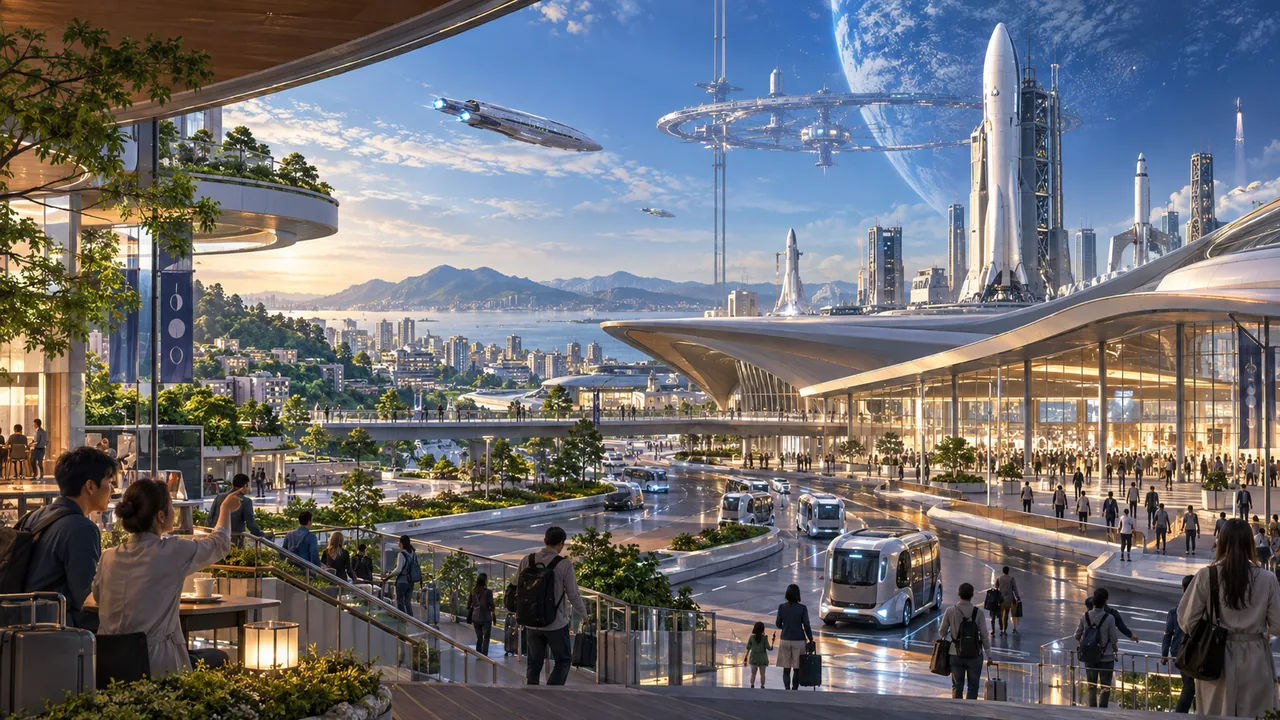
For some people, a habitat a few days from Earth becomes a housing option. They compare gravity, views and community life with homes on Earth.
- What becomes less common
- Comparing only destinations on Earth/Choosing homes mainly by commuting distance
- What becomes more common
- Travel between Earth and orbit/Guidance for different gravities and environments
- How could this change happen?
- Space accommodation expands → Long-term residence becomes an option → Travel changes the extent of everyday life
Residents help design their surroundings and rules

Residents work with AI to design shopping streets and homes with sea views. In artificial habitats, they discuss daily rules as well as the landscape.
- What becomes less common
- Choosing only from ready-made properties/Feeling remote from urban planning
- What becomes more common
- Residents designing environments together/Stewards of artificial ecosystems
- How could this change happen?
- Construction and environmental control improve → Small societies can be designed → Residents choose the rules of daily life
Plan for a longer active life
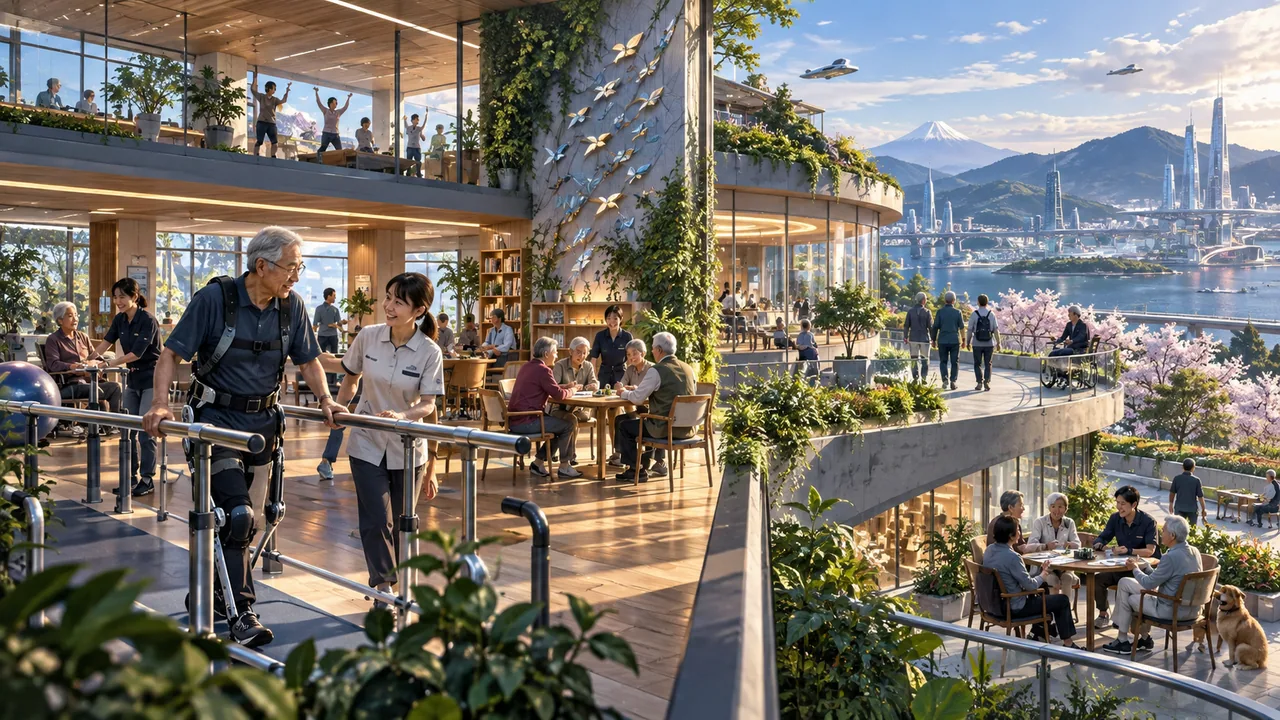
This scenario imagines better recovery of weakened functions, with more people starting activities after eighty. They plan a longer life with family and care professionals.
- What becomes less common
- Assuming life winds down at a fixed age/Dividing roles by age alone
- What becomes more common
- Planning life around longevity/Institutions supporting overlapping generations
- How could this change happen?
- More functions can recover → Active life extends → Cycles of education, family and participation change
Enjoy making things together
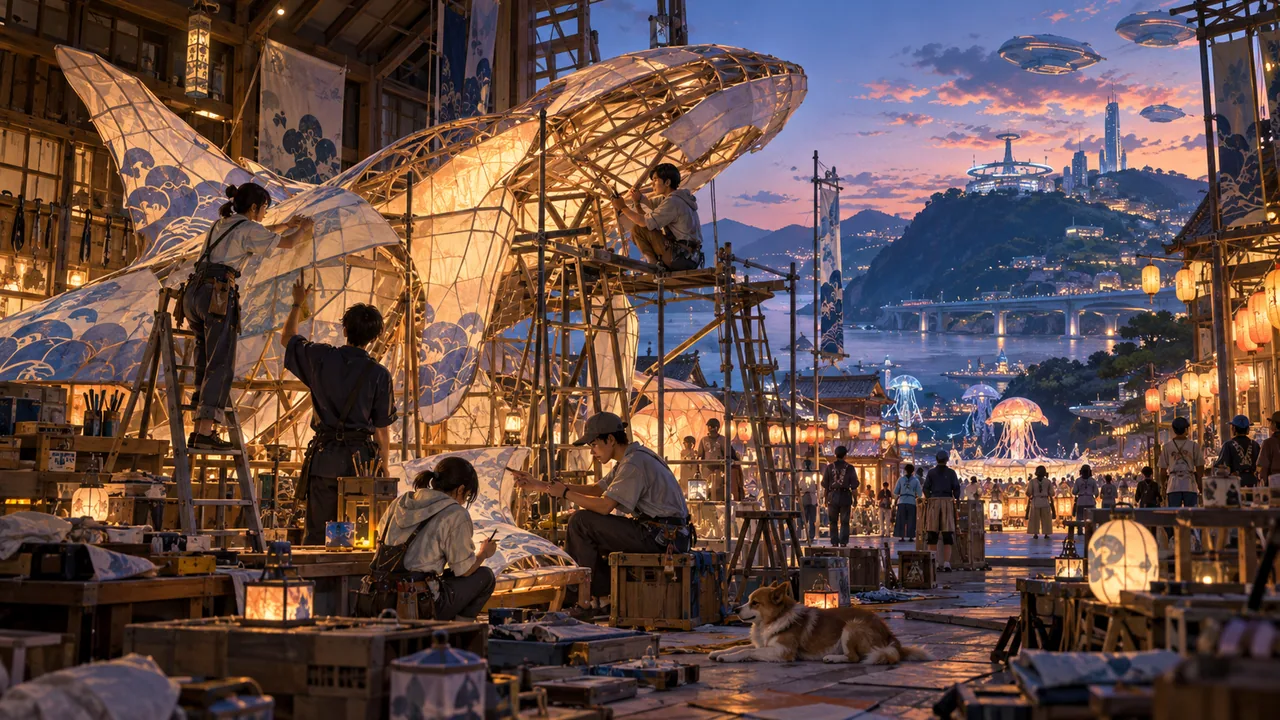
Even when AI could produce something quickly, friends spend years preparing a festival. More people value the shared process as well as the finished work.
- What becomes less common
- Competing only on the rarity of finished works/Giving up participation because of limited skills
- What becomes more common
- Handmade shared culture/Play that lasts for years/The value of having taken part
- How could this change happen?
- High-quality generated works become abundant → Finished outputs alone no longer distinguish us → Relationships and process become more central to enjoyment
Discuss who receives the benefits of space resources
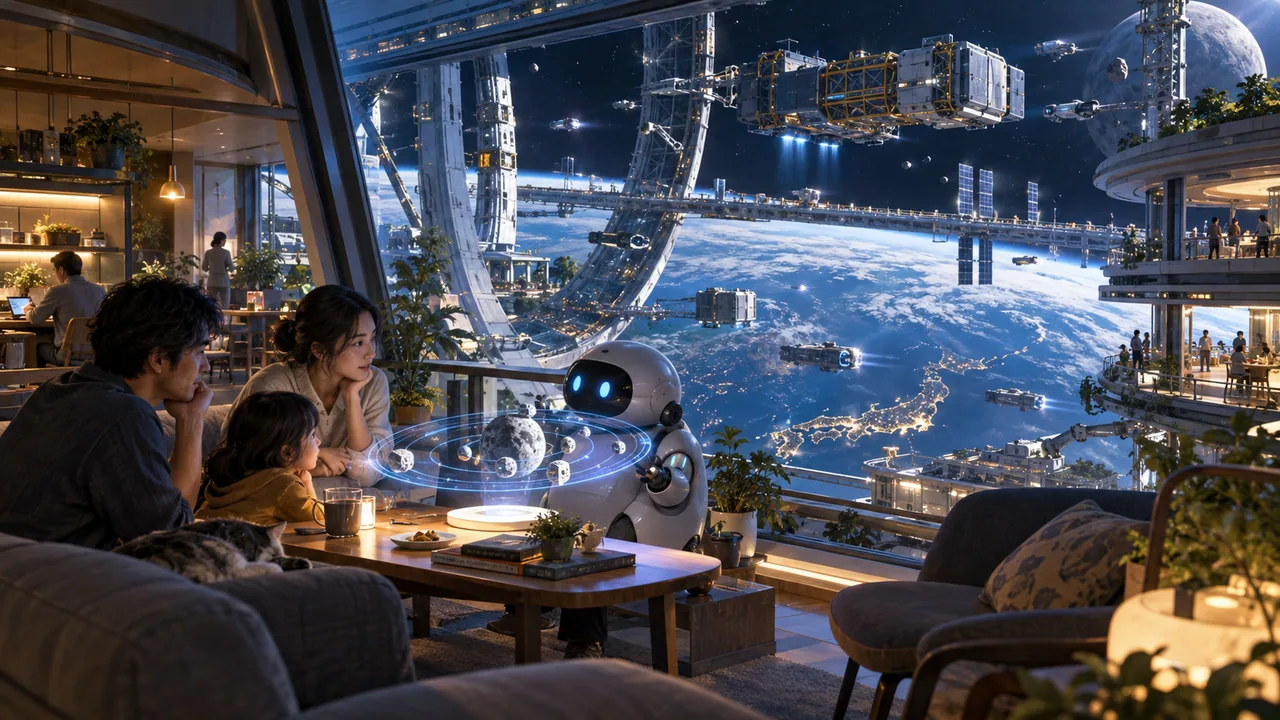
As space factories grow, people debate sharing benefits beyond the companies involved. Households consider how they might use a stake in space resources.
- What becomes less common
- Assuming space profits belong only to developers/Treating space as unrelated to daily life
- What becomes more common
- Systems for sharing space resources/Long-term community plans/Stewardship of future rights
- How could this change happen?
- Space production capacity grows → Who benefits becomes decisive → Proposals emerge for individual shares in space
2050 · Individuals join plans for distant space
A morning notification invites you to help shape the future of somewhere in space. The next question is not what to buy, but what kind of civilization to nurture.
7 a.m. A spiral galaxy floats above the breakfast table. 'What would you like this distant region to become?' A child answers: 'Lots of enormous forests.' Today's agenda includes tonight's dinner and forests millions of years from now.
Spend time on long-term projects
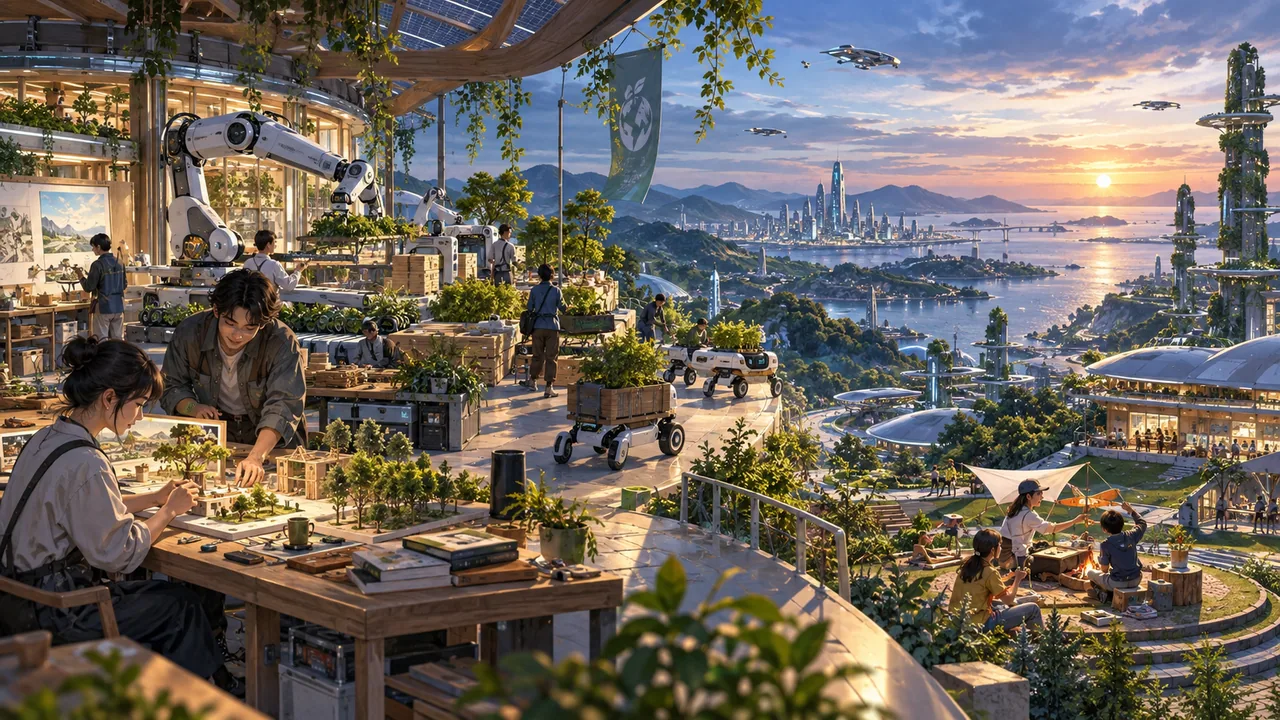
Machines produce everyday goods while people work on long projects such as schools or forests. They decide how to use the resources allocated to them.
- What becomes less common
- Unwanted repetitive work done only to survive/Competition measured only by short-term output
- What becomes more common
- Founders of multigenerational plans/Care for communities/Shaping shared values
- How could this change happen?
- Production and basic needs become automated → Spare capacity serves long-term purposes → The measure of a life's work changes
Experience distant space in virtual environments
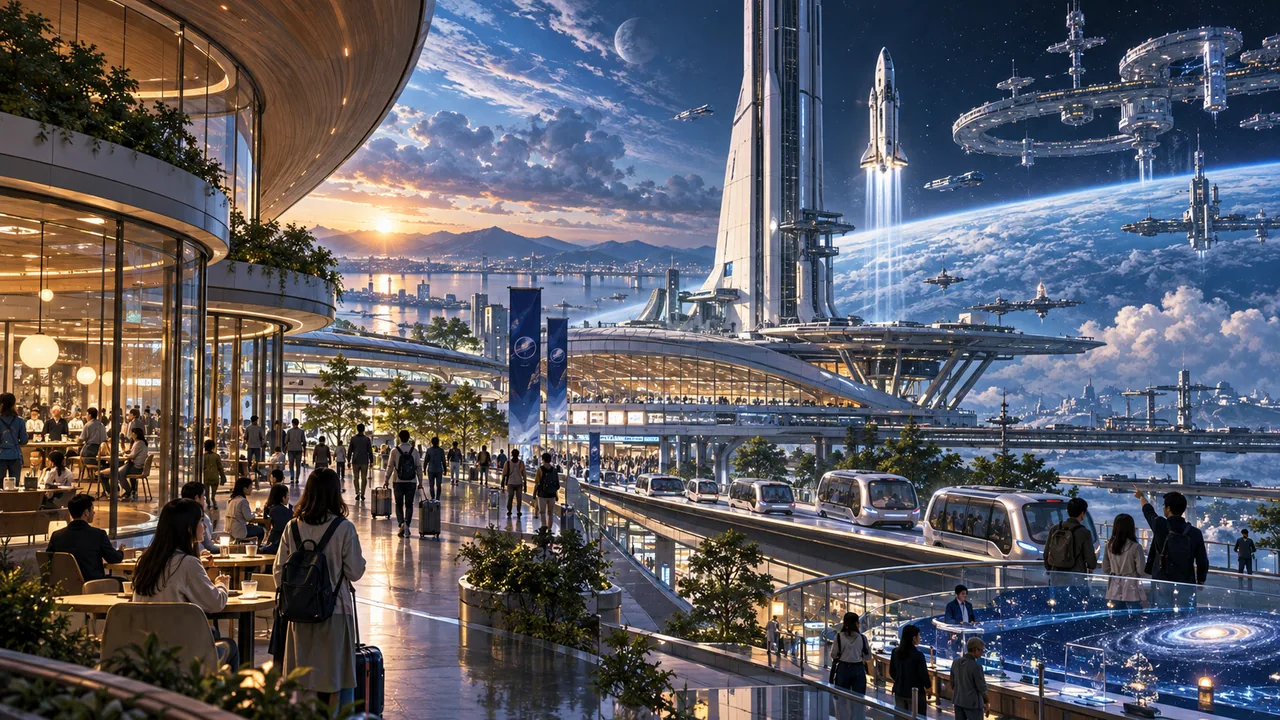
People travel physically to nearby space bases and explore distant galaxies through virtual models built from observations. These are not live views; distance still creates time delays.
- What becomes less common
- Measuring travel only by physical arrival/Planning on instant communication with distant places
- What becomes more common
- Designing long voyages/Immersive exploration experiences/Communication that accounts for delays
- How could this change happen?
- Physical travel faces the speed-of-light limit → Information and design spaces allow earlier involvement → Participation in space need not await arrival
Test future city designs from home
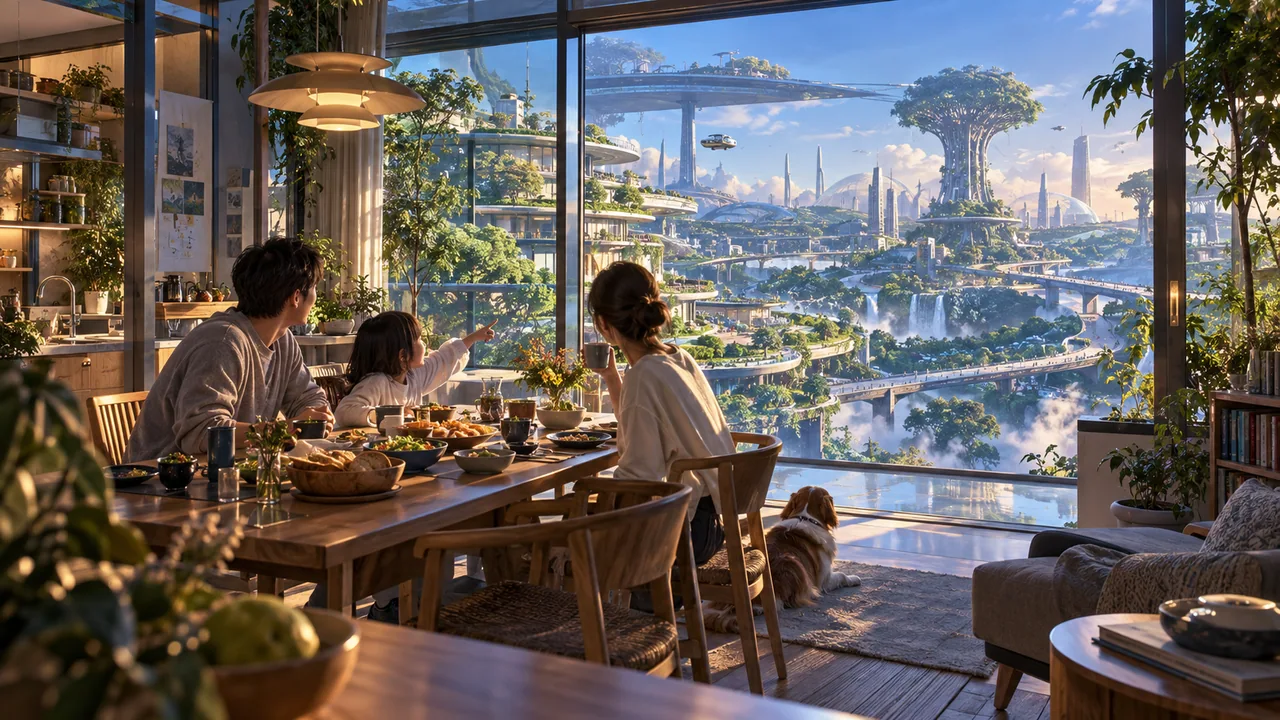
From the dining table, a family explores a virtual forest city they hope to build. They change buildings and paths as they try out what living there would be like.
- What becomes less common
- Thinking of a home only as a box in one place/Considering cities only through drawings
- What becomes more common
- Design spaces for testing future communities/Daily life connected to distant purposes
- How could this change happen?
- Build immersive environments → Try future ways of living in advance → The home becomes a laboratory for long-term plans
Age alone stops ruling out new activities
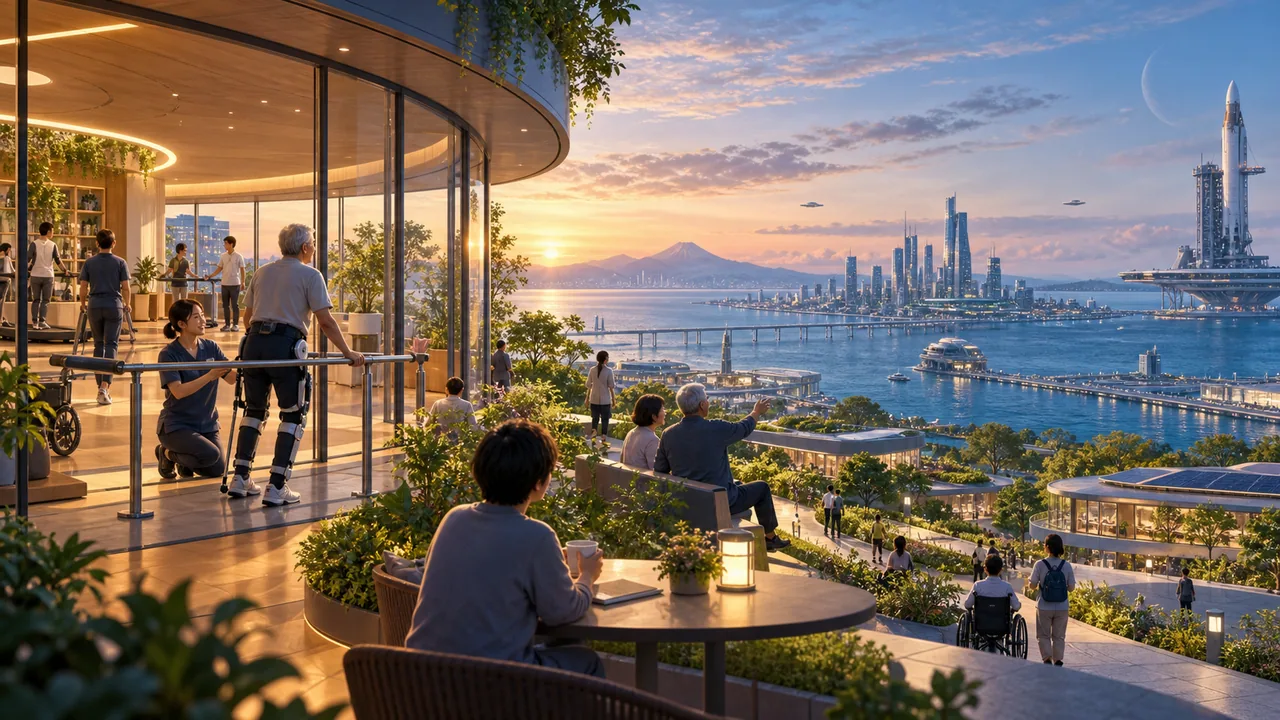
This scenario imagines better restoration and support of physical abilities, making longer plans possible. Long voyages into distant space remain a separate technical challenge.
- What becomes less common
- Uniform age cutoffs for activities/Options closed forever by one loss of function
- What becomes more common
- Planning for longer active lives/Choices about future bodily technologies
- How could this change happen?
- More ways to maintain the body emerge → Life plans stretch further → Multigenerational projects become a personal concern
Learn social rules by building virtual societies
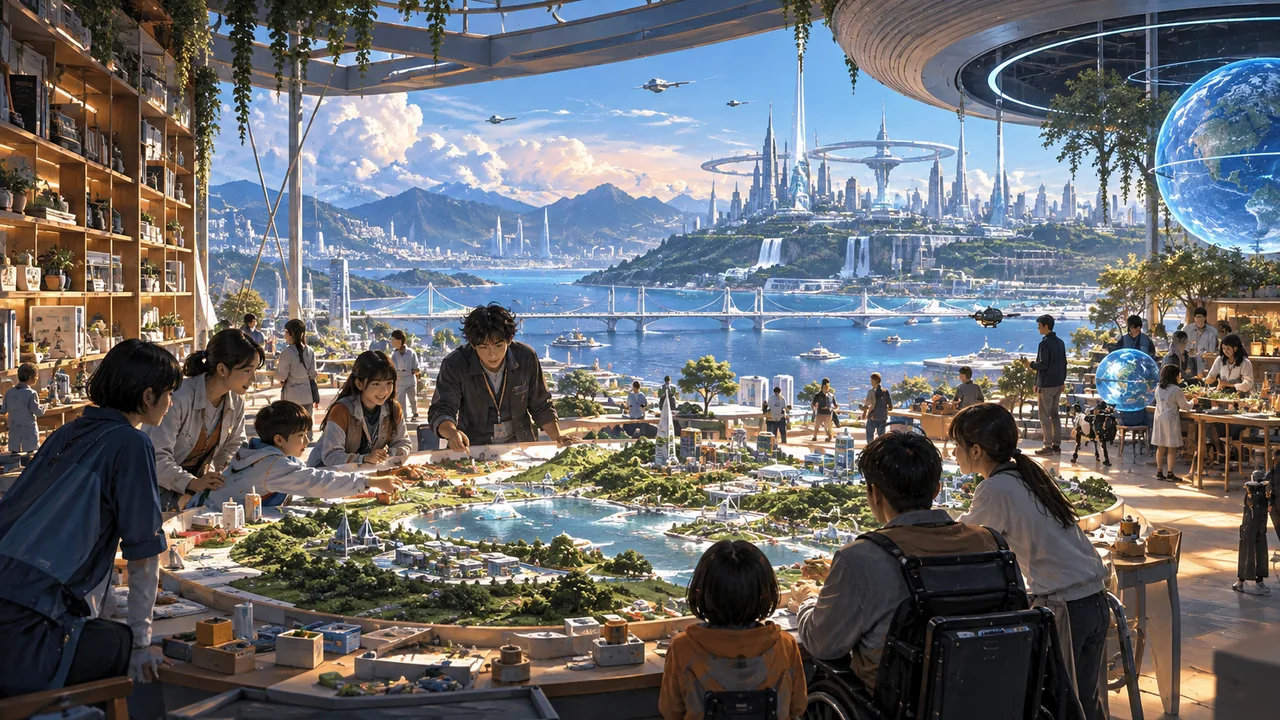
Children and adults build small virtual worlds to test societies they would like to live in. Together they explore how to resolve disputes and avoid exclusion.
- What becomes less common
- Learning limited to questions with fixed answers/Career paths aimed only at existing jobs
- What becomes more common
- Playing at civilization design/Creating with people whose values differ
- How could this change happen?
- The scale of worlds we can build grows → Failures can have greater consequences → Learning how to live together becomes central
Individuals take part in galaxy-scale plans
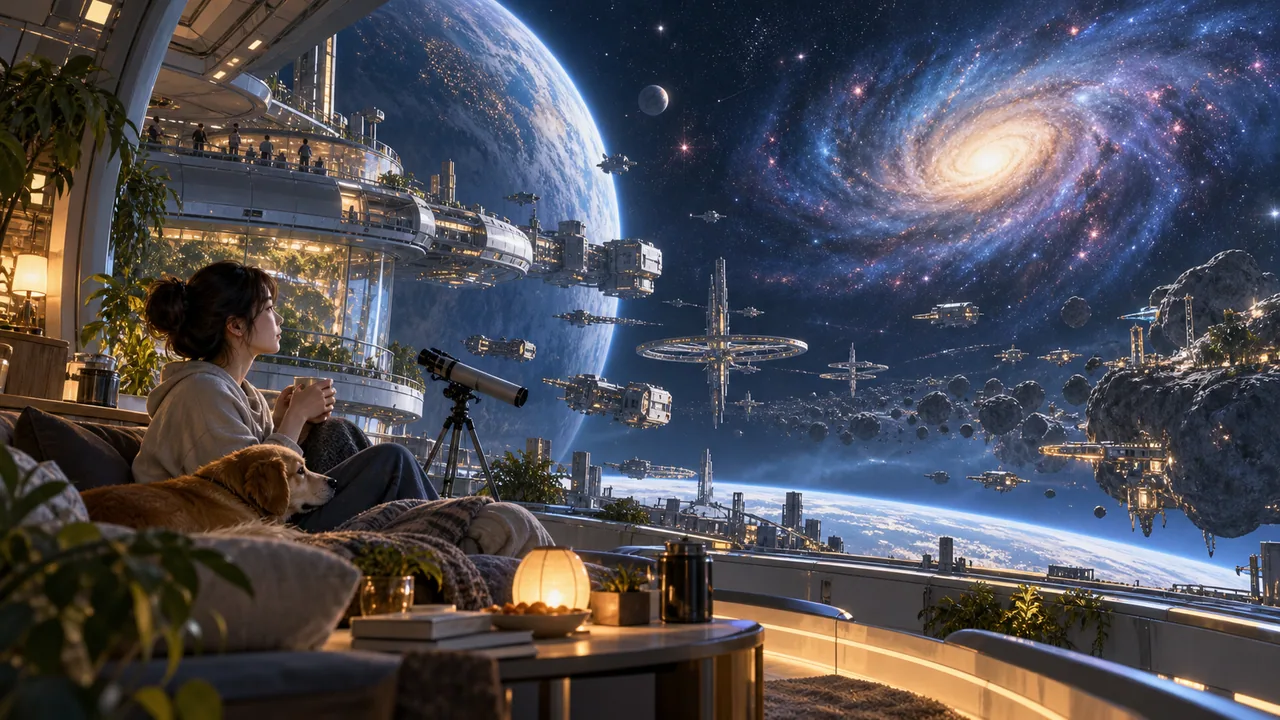
Imagine individuals receiving stakes in distant space resources. They have not arrived there; from Earth, they help decide the aims of long-term exploration and development.
- What becomes less common
- Assuming only a few organizations decide space's future/Measuring human aspirations only by Earth's land area
- What becomes more common
- Extremely long-term space plans begun by individuals/Responsibility to future residents
- How could this change happen?
- Superintelligence and space industry mature → Benefits and decision-making are shared among people → One person's wishes connect to a future on a galactic scale
Work changes imagined for 2027
Tasks that might be delegated to AI, alongside roles for people.
| Area | Tasks that begin shrinking first | Where people remain involved |
|---|---|---|
| Administration and accounting support | Copying data, classifying invoices, reconciling forms | Unusual transactions, suspicious numbers, coordination inside and outside the company |
| Translation and writing | Routine translations, product descriptions, first drafts of bulk articles | Reporting, cultural context, editorial decisions about what to say |
| Customer support | FAQs, order-status checks, initial routing | Complex complaints, context-sensitive solutions, rebuilding trust |
| Entry-level programming | Simple screens, routine tests, minor fixes | Deciding what to build, consistency with existing systems, responsibility during failures |
| Sales and planning support | Collecting market material, formatting proposals, taking minutes | Customers' real concerns, negotiation, decisions informed by the site |
| Driving and delivery | Lifts within limited areas, driving between fixed hubs | Trips outside service areas, loading, maintenance, helping passengers board |
Sources
AI Futures Project's AI 2040: Plan A is the starting point. The everyday scenes in this complete edition are original Future Observation News fiction.
Read the sources and story assumptions ↗